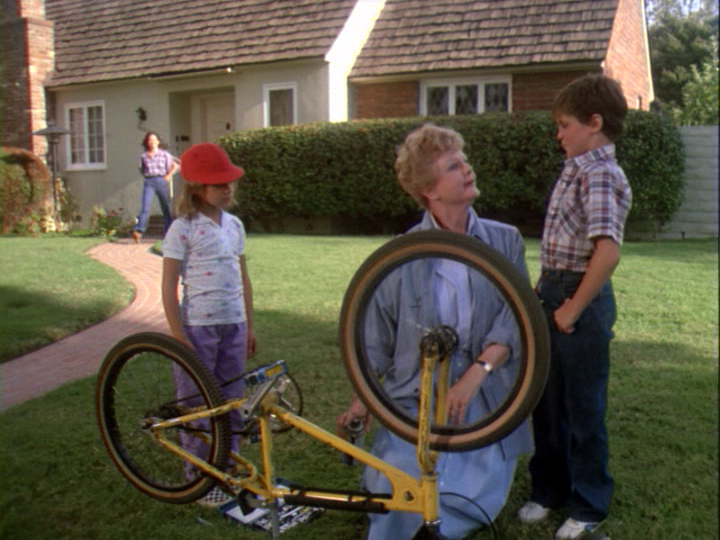
Don’t be afraid, my friends. Nothing frightening awaits you. Oh, perhaps a moment or two of panic, but we did warn you. Seat belts pulled tight? That’s good. And now, just sit back…
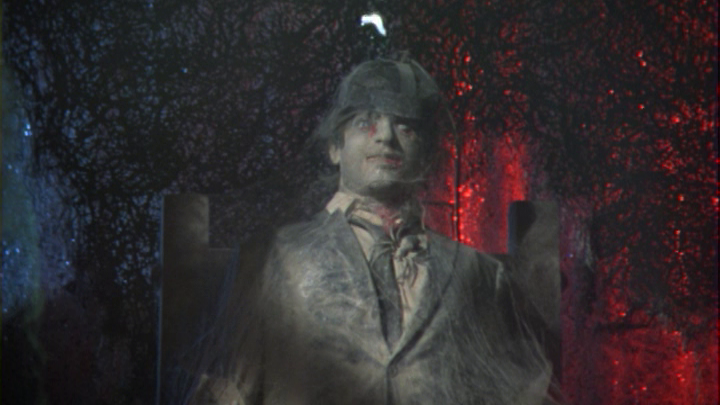
Welcome to Horatio’s House of Horrors!
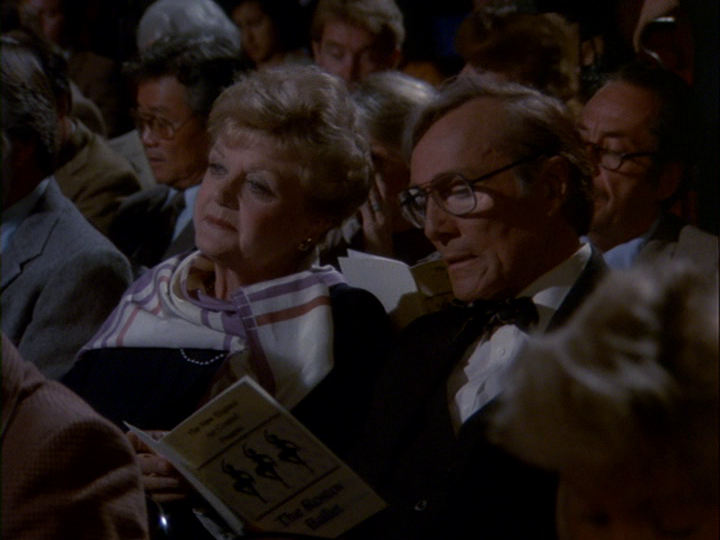
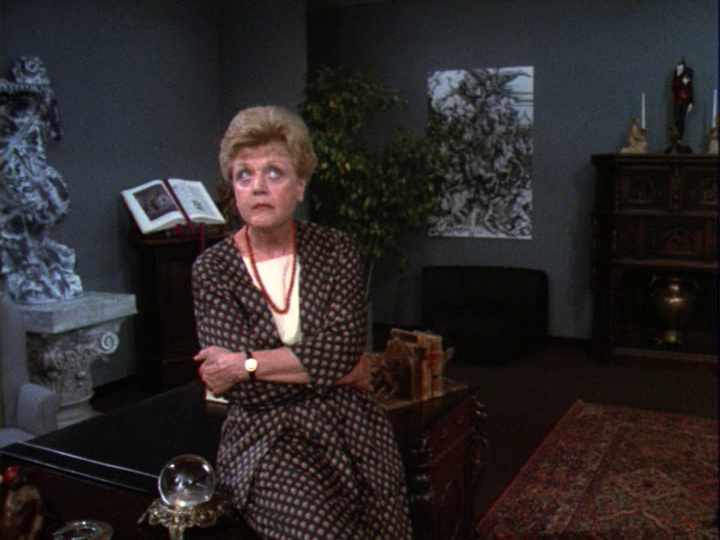
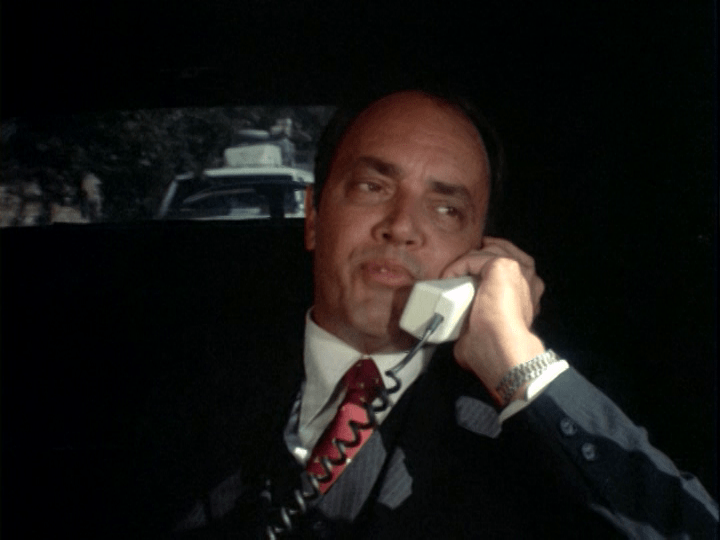
This episode is a delightfully campy, deftly executed locked room mystery. If you want to make it dinner and a show, you can eat along with Jessica and the Donovans with this family-friendly menu. Guests who wish to avoid spoilers should watch the entirety of “We’re Off to Kill the Wizard” before proceeding. Thank you, and enjoy the ride!
This episode guide has four parts:
This is the first part, an introduction which includes the setting, characters, and context of the episode.
The second part is a detailed timeline of the episode’s events. (Coming Soon!)
The third part is an analysis of the episode’s mystery. (Watch this space!)
The fourth part is a collection of fun extras called Bonus Features. (ETA? TBD!)
Where in the World is Horatio’s House of Horrors?
The casual viewer could be forgiven if they came away thinking this episode takes place in Kansas City. (I’m looking at you, imdb.) Kansas City, the City of Fountains, is mentioned numerous times throughout the episode, but that’s because it’s Jessica’s next destination.
Aunt Jess is currently visiting one of her nieces, Carol, who lives somewhere that’s only a short flight away from Kansas City… you may have heard of it – Chicago! Check it out in the MSWSW Atlas.
This episode is low, low key set somewhere in Chicagoland. There are no glamorous on-location scenes with sightlines to Chicago landmarks. The name “Chicago” is never even spoken. The only direct reference to the Windy City is this fake newspaper.
When Are We?
The Original Airdate
In the absence of evidence to the contrary, the first guiding principal I use in my work on the MSWSW canon timeline is to place an episode’s events before, but as close as possible to, the initial airdate. This episode first aired on Sunday, December 9, 1984.
The Oeuvre of J.B. Fletcher
Dirge for a Dead Dachshund has been published! This means that Jessica’s visit to this episode’s House of Horrors takes place after S1 E2: “Deadly Lady”, when Dirge was still in pre-publication. The earliest “Deadly Lady” could have taken place is June 1984.
This gives us an initial, broad timeframe for “We’re Off to Kill the Wizard” of June – December 1984.
The seasons of the year
Little Billy rides his bicycle down a leafy street. The canopy is a full, lush green, with no hint of fall colors. Chicago’s fall foliage season is typically underway by early October.
All those green leaves allow us to narrow the timeframe further, to June – September 1984.
The Days of the Week
I’ll go through the episode’s timeline in more detail in Part 2, but for now, it will suffice that the episode begins on a Saturday. Two days later, on Monday, Lieutenant Donovan’s desk calendar tells us it’s the 23rd.
Let’s take a look at the 1984 calendar:
From June through September, there is one Monday the 23rd, and it’s in July. Could an argument be made that in the midst of an active murder investigation, Lt. Donovan didn’t find the time to flippy-flip his day calendar? Sure. However, unless and until we come across evidence to the contrary, the MSWSW timeframe for “We’re Off to Kill the Wizard” is Saturday, July 21 – Thursday, July 26, 1984.
We see two sides of Jessica this episode. Aunt Jess is in town for personal reasons, spending quality time with her niece’s family. A model guest, she can fix bicycles andburgers for dinner! However, it’s J.B. Fletcher, the sought-after novelist, who finds herself mixed up in yet another colorful murder.
Jessica’s niece of the week, Carol leads a picture perfect life in leafy suburb. Another leafy place you can find Carol is the MSWSW Fletcher Family Tree.
Jessica with her niece Carol and grand-niblings Cindy and Billy
The other security guard at the scene of the crime has several lines, yet remains noticeably, and somewhat inconveniently, nameless over the course of the episode. I’ve decided to call him Nemo.
Is the glamorous, jet-setting Mrs. Baldwin a femme fatale? Perhaps we’ll never know for sure.
Repeat Offenders
If you’re a MSW fan (and if you’ve read this far, you are) I’m sure you’ve recognized a few actors who appear multiple times throughout the series, but in different roles. Check out The Rogues’ Gallery for more details.
In this episode, nearly all the actors portraying supporting characters (even Nemo!) will return to the MSW universe in future episodes, except James Coco (Horatio Baldwin), Anne Kerry Ford (Carol Donovan), and siblings Joaquin and Summer Phoenix (Billy and Cindy).
Garrote (Lengths of wire, strings of pearls, telephone cords…)
Pointy Object (Hat pins, knives, skewers…)
Poison (Allergens, overdoses, toxic substances…)
Rube Goldberg Contrivance (Absurdly complex contraptions and scenarios)
Sabotaged Conveyance (Automobiles with the break lines cut, doped horses…)
A remote controlled auto was used to hit and kill pedestrian Dean Merrill. In this case, the car was used as a blunt object. If poor Jessica had been driven off the cliff while she was inside the car, it would have then been used as a sabotaged conveyance.
Other Crimes!
I’m not even sure what the charges would be for intentionally sending a remote controlled car through a public park, or along a public road, but I’m going to go with multiple counts of reckless endangerment for Leslie Andler. Plus kidnapping, for taking Jessica on that wild ride.
In that vein, in addition to murder, Charles and Leslie probably committed all kinds of lesser offenses, like lying to a police officer, conspiracy, trespass, and probably wire fraud for that phone call from Daniel’s landline.
Speaking of wire fraud, there’s probably a case to be made against Jessica and Letitia, for snooping through Daniel’s phone records.
Remarkably, Jessica did not trespass for an entire episode; she had Sheriff Tupper’s permission to go snooping around the old Gentry farm.
There is a theory that Jessica Fletcher is the most successful serial killer of all time. If she’s actually Dean Merrill’s murderer, she ran him down with a car, plain and simple. The remote controlled station wagon was just a red herring. Too bad Dean couldn’t run, run, run, run, run, run, run away.
Tropes, Devices, and Other Conventions
Mystery Tropes
Frame-up
This episode, an innocent person is framed for crimes they didn’t commit. This is a series first, but it won’t be the last time MSW uses this trope.
Suspicious Phone Call
While we don’t overhear any part of the phone call placed from Daniel’s home phone to Charles Woodley’s office, it’s certainly a suspicious phone call, or, at least, the shadow of one. In the final scene, Katie concludes that Leslie placed the call. We never find out for sure if the call was placed to incriminate Daniel, or just to communicate with Woodley about their dark deeds.
Plot Devices
flashback
Here at MSWSW, we aim for a thoroughness, even if it draws a tear. Technically, during Jessica’s confrontation with Leslie, there is a brief flashback to the car rental agreement, which we previously saw at the gas station. It’s honestly just salt in the wound, because it’s a second missed opportunity to show us that GD odometer, already.
There’s a second flashback during Jessica’s summation in the final scene. It shows Woodley outrunning the station wagon the day of the picnic, to emphasize how slowly the car must have been going. It’s pretty straightforward, expository stuff.
MSW Tropes
Door of Truth
As often happens on MSW, a seemingly random experience helps Jessica put it all together. This time, Jessica gains an adorable, albeit ambiguous, moment of insight while playing an arcade game with Ethan.
Infinite Jest
One of the things that makes MSW so cozy is that, sometimes, something completely absurd happens as a plot vehicle. This time, it’s the entire premise, and it’s literally a vehicle.
Bait of Falsehood
Often, our lady practices to deceive in the service of justice. This time, she doesn’t outright lie or present false evidence. She does, however, trick Leslie into thinking the station wagon controls are still in the red and gray van during the reenactment.
Jessica’s been practicing that arcade game at McIntyre’s??? LOL!
Goofy freezeframe!
Roll credits!
What She Wore
How to Wear a Scarf
Jessica wears a number of scarves this episode, here they are, in order of appearance:
If you’re interested, you can find all of Jessica’s scarves from our journey so far here.
Jessica’s Best Look
Lois and Jessica discuss Cabot Cove’s historical facts and fictions
My favorite of our lady’s looks this episode is the red, white, and blue she wears to the Founders’ Day picnic. I think a belted shirt is a flattering silhouette for Angela, and this scarf is a lot of fun. Poor Lois gets lost in a sea of red check tablecloths, but Jessica stands out. She’s appropriately festive, without being eye-searing.
Best Look Overall
Best look overall goes to Katie, and her collection of statement necklaces. My favorite is the red and black one pictured here. I love it so much I feel a bit covetous.
Jessica’s Least Best Look
Before the nap dress, there were Laura Ashley, Jessica McClintock, and Gunne Sax. These flowy, uber-feminine dresses were supposed to be comfortable and pretty, but tbh, they make me feel uneasy, and possibly a little queasy.
In the first dinner party scene at Jessica’s house, both our hostess and her guest, Leslie, wear dresses inspired by the Gunne Sax/Laura Ashley trend of that time. These characters are both independent, professional women with active lifestyles, and in every other scene of this episode, their respective sartorial choices reflect that.
…Which is why I think these particular dresses stood out to me. While they are certainly very much on-trend for the time, they do not suit the characters wearing them. No other notes for Leslie though, she looks great in her white dress. (Patti D’Arbanville would probably look fantastic in anything.) Unfortunately, the pale pink, billowy dress that they put on Angela is not flattering. The scarf feels out of place, and initially, I felt like perhaps it was added because Angela also felt this dress wasn’t the right thing.
And then, I found this:
There it is, legal precedent for the neckerchief and nightgown look. Case dismissed?
But why then do I still feel so ill at ease about these really comfy dresses?
Wait. What’s that in the upper righthand corner? What message is Jessica McClintock sending us?
Without telling me, he told me. He loves the way I look when I look this way.
Gunne Sax by Jessica McClintock
Ugh. No. Nope. No thank you to this post-feminism backlash BS. Wear what you want, but please dress for yourself, and not for an unarticulated male gaze.
Full disclosure, I never had a Gunne Sax dress; not by choice, exactly. I was still in my Polly Flinders era.
Least Best Look
Least best look goes to Tony, and his troubling pattern of conspicuous deshabille. Within the context of an episode of Murder, She Wrote, Tony’s inability to keep his shirt buttoned isn’t sexy, just louche and a little bit desperate.
Interior Motives
This episode’s award for most distinctive interior goes to Daniel’s made for TV workshop.
The Rest of the Story
The writers put a great big bow of a happy ending on this one for us. I haven’t really discussed it, mainly because I don’t care. I don’t feel invested in Daniel and Katie. They are too thoroughly nice and guileless to be interesting. However, their happily ever after happens in Jessica’s dining room, and I’ve included shots from that scene in my overview of our lady’s iconic home.
Tony turns out to be an easy come, easy go kind of guy. After the initial shock of Leslie’s duplicity wears off, he quickly bounces back.
Neither Jessica nor Ethan wins the Spy Hunter tournament at McIntyre’s. Lois Hoey unexpectedly routs the entire field.
Extra Credit
In a small town, locals severally glimpse a mysteriously conveyed vehicle. Its ultimate purpose is to circumvent the complexities of an estate plan. Polly Flinders makes a cameo.
Hello, and welcome to MSWSW’s analysis of “Hit, Run and Homicide.”
There are four parts to this episode guide:
Part 1 includes the setting, characters, and context of the episode.
Part 2 is a detailed timeline of the episode’s events.
This is Part 3, my analysis of the episode.
Part 4 is a collection of fun extras that I like to call Bonus Features.
Show Your Work
Pencils ready!
How does this episode’s mystery stack up? Is it plausible? Does it make sense? Can the audience solve the mystery by the time Jessica does?
Fair Play Pause Point
Jessica has her epiphany while playing the arcade driving game Spy Hunter. By this point in the episode, which I call the fair play pause point, can the audience solve the mystery?
The Wrong Man?
This episode uses a popular mystery and suspense convention, the frame-up. The central mystery is whether Daniel is being framed for a murder he didn’t commit, rather than the murder itself. So, my analysis will focus on whether we, the audience, can figure out if Daniel is being framed, and if so, by whom.
Clues!
The Remote Controlled car
A driverless car wielded as a weapon is already stretching this plot’s plausibility nearly to its breaking point right out of the gate.
Thankfully, everyone readily accepts that this is a remote controlled vehicle, rather than some sort of supernatural phenomenon, which keeps us from veering off into Scooby Doo or Steven King territory. Daniel readily acknowledges that he openly worked on similar designs in the past. Katie, his former WAMCO colleague, corroborates this.
Charles’ Unbroken Bones
Charles Woodley manages to out run a car. He escapes serious injury, too. Yet, he’s in so much pain he must remain in the hospital.
Dean’s Chartered Boat
This is my favorite clue this episode. It’s very subtle. It doesn’t make it into Jessica’s summation at the end of the episode, which is a shame. When Dean Merrill disembarks in Cabot Cove, he says his partner (Charles Woodley) told him to arrive by chartered boat.
Because the walk from the marina to the hospital is shorter than the walk to the nearest cab (at the train station), this forces Dean to walk a specific one mile stretch between the marina and the hospital, setting him up for his deadly encounter with the station wagon.
Daniel’s Phone Records
Jessica and Letitia do some snooping and discover that recent calls made from Daniel’s phone number include one to Charles Woodley’s office in Boston.
As Jessica is quick to point out, this doesn’t prove Daniel placed the call, only that someone used his line to do so. Alas, modern technology has since laid waste to the plausible deniability of landline phone calls. However, back in 1984, this cast suspicion on the four people who had easy access to Daniel’s landline: Katie, Tony, Leslie, and Daniel himself.
The Red and Gray Van
She may have seemed perfectly innocent at the picnic. Or, perhaps she was just very easy to miss. However, after Jessica’s wild ride, the link between the remote controlled station wagon and the red and gray van is undeniable.
I’m a little baffled that neither Jessica nor Ethan seem to make the connection after the car chase. They both understand the station wagon is being controlled remotely. Out at the lighthouse, the van is the only other vehicle present, so the van’s driver, or possibly a passenger, must be responsible for controlling the station wagon. Right?
Daniel’s Files
Files identical to Daniel’s designs for a remote controlled car are found in the station wagon. This is such weak evidence even Amos is dubious, but it’s not Murder, She Wrote unless an innocent person gets arrested before the denouement.
Leslie’s Unsolicited advice
I think I once read somewhere that unsolicited advice is always self-serving. There’s room in my worldview for the occasional altruist, but that’s not the case here. Leslie’s suggestion that Daniel may need psychiatric help is another subtle clue.
WAMCO’s Financials
Katie spills the tea about the WAMCO boys. They’re low on cash, and now that Dean Merrill is gone, Charles Woodley owns 100% of the business.
Daniel’s Estate
Tony is Daniel’s only living relative. He stands to inherit Daniel’s (modest) estate, with the exception of Daniel’s patents, which would to go the University of Maine.
$7.08 and a Rental Agreement
This could have been a terrific final piece to the puzzle, but instead it’s an unforced error that really spoils this episode for me. When Tony stops for gas, the total comes to $7.08.
Dear readers, it’s time for some math. I promise to keep it short and sweet. In 1984, the U.S. national average price for a gallon of gas was $1.13. So, Tony’s $7.08 would have bought about 6.27 gallons. The fuel economy for a Ford convertible would have been around 20 miles per gallon. Assuming that the driver (Leslie) always filled up the tank, that implies that the car had been driven about 125 miles since the last fuel stop.
Wait, how far away were all those Portland appointments, again?
Right, 100 miles round-trip, thanks Tony.
So, on its face, the $7.08 fill-up is totally plausible. And that’s assuming Leslie never got gas in Portland before heading back to Cabot Cove. Well, never mind. What’s important is that the pitstop inspires Jessica to snoop in the glove compartment for the car rental agreement.
Ok, great!
Let’s all take a look-see at this important clue.
If you’re disappointed that we didn’t get to see that odometer, chin up! The writers have one more clue for us. It’s intentionally ambiguous, but it’s full of thematic appeal.
The Arcade Game
While playing Spy Hunter, Jessica realizes…. well, something about driving too fast? Or maybe driving too slow? The audience doesn’t get to find out exactly what Jessica’s epiphany was until after she confronts the killer.
Ok, they also use this scene to explicitly state that the station wagon was operated from the red and gray van, but, like, duh.
J’accuse!
The Reenactment
Following her aha moment, Jessica and Sheriff Tupper arrange for a reenactment of Charles Woodley’s encounter with the station wagon on the softball field. In classic MSW style, Jessica is able to trick the killers into revealing themselves, and triumphantly confronts them with proof of their guilt.
Fair Play?
We’re back on the softball field, but are the writers playing ball? At this point in the episode, we already know that Jessica believes Daniel is innocent, but we don’t have all the facts. Specifically:
What was the convertible’s odometer reading? The $7.08 worth of gas is inconclusive on its own.
What was Jessica’s big revelation during the arcade game? She’s enlightened, but the audience is still in the dark.
Can we conclusively identify the guilty without this information?
Katie was forthcoming with potentially incriminating information about WAMCO. Further, she has no motive to either kill off the WAMCO boys or frame Daniel, so she can reasonably be cleared of suspicion.
If we’ve been paying close attention, there are enough clues to implicate Charles Woodley, but he must have had an accomplice who controlled the station wagon.
Woodley’s accomplice could be Tony or Leslie. Until the reenactment, we don’t have enough information to determine which one it is. It might even be both of them.
Guilty!
So, no, this is not a fair play episode. Fair play is a style choice, and does not necessarily determine the quality of the storytelling. A high quality mystery can be engaging, precise, novel, comedic, you name it, without using fair play.
Unfortunately, in my opinion, that’s not the case here. At MSWSW, we’re sticklers for plausibility and precision. The characters’ choices must make sense. The clues must be relevant. The explanation of the puzzle must be complete.
This episode’s shortcomings are all in evidence at the reenactment:
First, how did law enforcement find the red and gray van? And in finding it, certainly its location, registration, plates, VIN, etc. would be important, and possibly conclusive, evidence as to who killed Dean Merrill. So important and conclusive, the whole reenactment might not even have been necessary. While we’re on the subject, those same identifying features (registration, plates, VIN) for the station wagon would also probably be edifying. And if not, we the audience should be told why not.
Jessica confronts Leslie with Tony’s gasoline tab. Not only is this a meaningless figure, as we’ve already established, but how TF would Leslie know what Jessica’s even talking about? She wasn’t at the gas station.
Yeah, maybe you did, Jessica, but we didn’t. Why force fuzzy math about gasoline on us, when you could just show us the odometer and do some nice, simple math about those 100-mile trips back and forth to Portland?
I’m with you, Amos.
Episode Rating
For me, the most appealing aspect of this episode is its location. Like most MSW enthusiasts, I have a soft spot for Cabot Cove and her denizens. Otherwise, I found this episode to be pretty mediocre.
Even though this episode was only ok, I hope you won’t let that stop you from going on a joyride with me in Part 4: Bonus Features!
Part 4 is a collection of fun extras that I like to call Bonus Features.
The Timeline
Not a lot of time or attention is given to establishing a precise timeline this episode. The plot doesn’t rely on time-specific details, so it’s not devastating, just more of a missed opportunity, imho. Here’s my take on this episode’s sequence of events:
The Days of the Week
Since a town celebration takes place on Day 1, it’s most likely either a Saturday or a Sunday. On the following day, Leslie the Saleslady says she has business appointments in Portland, and for that to be most plausible, Day 2 is probably a weekday, making Day 1 most likely a Sunday and Day 2 a Monday.
Charles Woodley outruns a driverless station wagon, ends up in Cabot Cove hospital, and gives his statement to Sheriff Tupper.
I’m going to differ with the captions here. I think the name of the company is meant to be WAMCO (or WAM Co.) Electronics, the WAM being short for Woodley And Merrill.
Monday: Murder
Morning
Jessica drops by Daniel’s house with a pie for his guest, Katie. We meet Daniel’s nephew, Tony, and Leslie, his extremely new fiancée. Jessica tells Daniel about Woodley’s story, specifically, that he is visiting Cabot Cove at Daniel’s invitation.
This is just one of a collection of really interesting statement necklaces we’ll see on Katie. They must have been from June Allyson’s personal collection. I liked them so much I made a gallery.
Tony is young, attractive, and has a good job in the city. This episode failed to sell me on the idea that he is so naive and/or desperate that he would be an easy target for someone like Leslie.
Woodley’s business partner, Dean Merrill, arrives in Cabot Cove via a chartered boat. After getting directions from Ethan, Dean is done in by a certain sinister station wagon on his walk to the hospital.
Afternoon
Ethan visits Jessica and tells her about Dean Merrill’s death, and convinces her that Sheriff Tupper needs her help.
They eat cookies.
Dear reader, the cookies struck a chord. I feel deeply nostalgic about these cookies, which I believe to be Keebler Pecan Sandies. They still make them, so you can feed your inner child, or your inner Jessica, or even your inner Ethan.
After they agree to collaborate for what feels like the very first time, Jessica and Amos visit Charles Woodley at the hospital. Did Daniel invite him to town or not?
Evening
Jessica joins Daniel, Katie, and Tony for a remarkably uneventful cookout. Daniel acknowledges his driverless car design and again refutes Woodley’s claim that he invited the WAMCO boys to town, but no new information is forthcoming.
Tuesday: Investigation
Morning
Jessica gets Daniel’s phone records from Letitia. She has a chat with Katie about Daniel’s past relationship with WAMCO.
Daniel and Tony join them to showcase a new invention that flops on multiple levels.
Afternoon
Off camera, Ethan and Tony participate in the Sheriff’s town wide search for the mysterious and murderous station wagon.
Evening
More on this party’s sartorial choices in Part 4
Ethan, Tony, and Leslie have dinner at Jessica’s house. Over coffee in the parlor, Jessica shares her theory that the station wagon is hidden in a stretch of woods east of the old Gentry farm, and promises to call the Sheriff in the morning.
Wednesday: Full Speed Car Chase
Morning
With Amos’ consent, but not his support, Jessica searches the woods near the Gentry farm, finds the mysterious station wagon, investigates, and gets taken for a ride.
Ethan and his pick up truck come to the rescue in this episode’s only full speed car chase. When it comes to an end at the cliffs by the lighthouse, the red and gray van is also on the scene, but no one can quite figure out what it means, it’s all just so mysterious!
Afternoon
The end result of the morning’s chase is that the police now have possession of the station wagon. It contains files implicating Daniel, and so Amos reluctantly takes him into custody.
Evening
Back at their digs at the old Hansen place, Leslie gently suggests to Tony that his uncle may need to be evaluated by a psychiatrist.
Meanwhile, Jessica and Katie go for what appears to be an aimless (and grainy) twilight walk through the brush. They discuss the partnership arrangement and financial situation at WAMCO.
Thursday: In the Clink
Morning
Jessica visits Daniel in lock up. She gets a ride home from Tony in Leslie’s rented convertible. On the way, they stop at a gas station and discuss Daniel’s estate plan. Tony spends $7.08 on gas.
Evening
Daniel’s front yard Wednesday features Jessica, sad Katie, convertible
Daniel’s front yard Thursday also features Jessica, sad Katie, convertible
If it feels like we’ve been here already, yes. In a scene framed almost identically to the previous evening (sans panda), Tony takes Daniel away for psychological evaluation.
Friday: Epiphany at McIntyre’s
If you’re here for nostalgia, you’ve hit the jackpot at Cabot Cove’s local grocery.
McIntyre’s: Come for the apple decor…Jessica ends up getting more than just typing paper and tomatoes.
…. stay for the baloney.What price this transcendent, blissful epiphany? A quarter.
After a turn at the arcade classic Spy Hunter, Jessica figures it all out.
Saturday: Reenactment
Back at the softball field, Charles Woodley survives a second encounter with the mysterious and deadly station wagon, and Jessica’s plan to expose Dean Merrill’s murderer is a success.
Hello, and welcome back to Cabot Cove for another cozy murder mystery. Before reading further, please watch the episode, there will be spoilers! If you’ve got a beach nearby, this episode pairs nicely with a New England Clambake.
There are four parts to this episode guide:
This is Part 1, an introduction including the setting, characters, and context of the episode.
Part 2 is a detailed timeline of the episode’s events.
Part 4 is a collection of fun extras that I like to call Bonus Features.
A Crash Course in Road Safety
Welcome back to Cabot Cove for Jessica’s second collaboration with Sheriff Tupper. Or is it? Either way, there’s an absolute fleet of autos that make this episode go. Even the famously non-driving Jessica gets her turn behind the wheel.
In the absence of evidence to the contrary, the first guiding principal I use in my work on the MSWSW canon timeline is to place an episode’s events before, but as close as possible to, the initial airdate. This episode first aired on Sunday, November 25, 1984.
The Oeuvre of J.B. Fletcher
This episode doesn’t include any details about J.B. Fletcher’s writing, although we do get to see the author at work at her typewriter. When Jessica first meets Leslie Andler, the newcomer says she’s read Jessica’s “books” plural, which means the events of this episode took place no earlier than May 1984.
The Clambakes and Cookouts
Founder’s Day Clambake and PicnicA Cookout with Daniel
The denizens of Cabot Cove are outdoors enjoying warm weather throughout this episode. The town holds a celebratory picnic, Daniel hosts a cookout, and the rose bushes are in bloom. All of this points to a warmer time of year, if not strictly summer, then certainly sometime between May and September.
The Unbroken Ice
With all that lovely warm weather, the ice between Jessica and Sheriff Tupper strikes one as a bit strange. Just a few episodes ago, Amos unhesitatingly called Jessica as soon as there was a whiff of foul play.
And yet, here they are, smack dab in the middle of episode 7, acting like they’ve never even thought of cooperating on a case.
Jessica and Amos in S1 E7, making tentative overtures as tepid as that Styrofoam cup of coffee.
It’s my theory that this episode is, in fact, the first time Jessica and Amos work together. Further, the sweeping aerial shots of rugged coastline and the majestic musical score give the opening scenes of this episode a premiere aesthetic. I feel almost certain that this episode was originally intended to air as the series’ first episode after the pilot, or at least as the series’ first episode set in Cabot Cove.
So, in terms of our MSW canon timeline, I’ve decided the events of Hit, Run and Homicide occur before those of Deadly Lady, explaining the differences in Jessica and Amos’ rapport, and placing Hit, Run and Homicide sometime between May and early July 1984.
The Players
In order of appearance, the locals we’ll meet this episode, plus a few from away:
We continue to build our list of Cabot Cove locals this episode. Special mention goes to Lois Hoey, in her second, and sadly, last appearance as Jessica’s friend and a Cabot Cove lady about town. Other denizens we encounter this episode include Letitia, Nurse Bates, and Cora.
The Automobiles
A veritable fleet of vehicles provides the driving force for this episode. Some of these autos almost have as much personality as the actual characters. In order of appearance:
The Red and Gray Van
Large, looming, and ominous, what is the purpose of this mysterious vehicle, and who is the shadowy figure behind the wheel?
The Driverless Station Wagon
Oh, the dream of the safe, reliable, self-driving car. Forty years later, and we still haven’t figured it out.
Ethan’s Old Pick Up
A vehicle beatified by its service and honest wear, it is a reflection of the man behind the wheel. This must be Ethan’s business-mobile, as it bears the name and crest of Cragg’s Charter Services.
Leslie, the New Sedan
Ick, ick, triple ick upon the writers’ room, for creating a character who voluntarily and needlessly likens herself to a sedan. Girl, if you’re going to objectify yourself, be a Porsche, be a Maserati, be a pink Cadillac. Or, you know, don’t.
The Rental
While a Bostonian like Tony could get by without a car, it’s unusual for a traveling saleslady not to own one.
The Moving Van Heading North on Highway 27
This van is headed towards Augusta, and away from the truth.
The Panda
Cabot Cove’s finest serve and protect in this law enforcement classic.
The Arcade Game
Ethan and Jessica play the 1983 arcade classic Spy Hunter. Jessica’s turn at the wheel inspires this episode’s aha moment.
Hello, and welcome to the fourth and final part of my Lovers and Other Killers episode guide. If you haven’t already seen it, I recommend starting with Part 1. There are four parts to this episode guide:
Part 1 is a introduction, including the setting, characters, and context of the episode.
Part 2 is a detailed timeline of the episode’s events.
This is Part 4, a collection of fun extras that I like to call Bonus Features.
Bonus Features
Gender Politics 101
This episode examines conventional gender roles, norms, and double standards, but with a critical eye, or a blind one?
The Bechdel Test
This is a murder mystery in which the sleuth, both murder victims, and the murderer are all women. However, this episode comes very close to failing the Bechdel test, because almost all the conversations between the female characters are about men. Allison Brevard dies without any dialogue. Lila has a single conversation, it’s with Jessica, and it’s about David. Except for a brief exchange about the secretarial job posting, Jessica and Amelia only talk about Edmund and David, until their final conversation about Lila’s murder.
Does it matter? This series is built on the appeal of a strong, intelligent, multifaceted woman who goes everywhere, knows everyone, and is good at just about everything. No one could accuse Murder, She Wrote of representing women in a limited way, right? Right?
Tale as Old as Time
Ok, maybe not tale as old as time, but certainly a trope as old as the workplace. Amelia, the secretary, is in unrequited love with her boss. Likewise, David, the other secretary, is also romantically interested in his boss. Neither of these relationships gets off the ground. However, Lila, the teaching assistant, is allegedly having affairs with at least two of her superiors at the university, with disastrous consequences.
Power-imbalanced workplace relationships like these are often portrayed as both prevalent and romantic, but they are potentially very destructive, and arguably non-consensual on the part of the subordinate. It’s frustrating to me that neither Professor Lowery nor Dean Gerard seem to fear any professional consequences after pursuing a (murdered) teaching assistant. And yes, while it’s possible for a woman in a position of power to exploit a subordinate in this way, the reverse is much more common.
Men and Women Can’t Be Friends?
The premise of When Harry Met Sally (1989)
This episode seems to be of two minds when it comes to platonic relationships between men and women. Edmund and Jessica are old friends, but now that they are both widowed, shipping them seems almost unavoidable, from Edmund’s playful assertion that Jessica “picked the wrong one” to Amelia’s jealousy of Jessica as a perceived rival. On the other hand, Jack the jealous husband easily dismisses the exceptionally attractive David as simply a friend of his wife, and nothing more.
The Pick Up Artist
The most interesting and memorable dynamic of this episode is the relationship between David and Jessica. David’s interview is basically a pick up routine, and it’s calculated to leverage Jessica’s ideals about gender equality. It’s how he (literally) gets his foot in the door.
The rest of his interview plays out like a conventional pick up. David tricks and charms Jessica into letting down her guard.
And once he’s won her approval, he even has the audacity to neg her writing.
David would like Jessica to believe that all her misgivings about him are rooted in her own gender biases. And it works, for a while, at least. When her confidence in him does begin to flag, it rebounds seemingly as an indignant response to Andrews’ and Edmund’s sexist and ageist aspersions about their relationship.
In the end, David Tolliver is a flawed, but ultimately innocent, character who may sincerely care for Jessica. So, is he a modern young secretary whose genuine interest in a successful older woman upends 1980’s gender norms? Or, is he a creepy pick up artist whose manipulative behavior reinforces conventional narratives?
It’s OK to Say No to a Man. Here’s How.
The gender politics of this episode are pretty muddy. However, in a world where gender inequality and double standards still exist, Jessica demonstrates how to confidently communicate and enforce her personal boundaries with a man who would transgress them. This may not seem revolutionary or heroic, but it is quietly empowering to generations of women inured to accommodating men.
Before Our Eyes: Poor Allison is strangled on-screen
Crime Scene: A posh townhouse
Discovery: 4 minutes, or 8% through
Second Murder!
Victim: Lila Schroeder
Culprit: Amelia the Secretary
Motive: Jealousy (Greed)
Weapon: Longshoreman’s Hook (Pointy Object)
Done Deed: The fatal blow is struck off-screen
Crime Scene: An abandoned warehouse
Discovery: 24:30, or 50% through
Other Crimes!
Reckless driving: Amelia, for that night at the Lumberjack Inn
Assault and battery: Amelia, for pushing Jessica down the stairs
Obstruction of justice: David Tolliver, for lying to the police about his whereabouts the night of Allison Brevard’s death, and the nature of his relationship with Lila Schroeder.
Trespass: Amelia, Lila Schroeder, and Jessica Fletcher, for their several encounters at an abandoned warehouse. David Tolliver, for inviting himself into Jessica’s hotel suite one too many times. And, while it might not have been trespassing, honorable mention to that time Jessica gained access to the Sequoia University men’s gym.
There is a theory that Jessica Fletcher is the most successful serial killer of all time. It’s pretty easy to see how she might have done it this time – instead of Amelia, it was Jessica who stuck a longshoreman’s hook into Lila. Why? I imagine Jessica might have found Lila’s phone etiquette a bit lacking, and she hates people when they’re not polite.
Tropes, Devices, and Other Conventions
Mystery Tropes
Love Triangle Hexagon
If you count Emily Lowery, a great gal who’s hard to fool, there are three men (Jack, Edmund, Todd) and three women (Lila, Amelia, Emily) in this episode’s proverbial love triangle, except that three and three makes six, which adds up to a love hexagon.
Oddly located corpse
Allison Brevard is killed in her own home, which is chillingly realistic, but Lila is murdered in a more unusual place, a spooky abandoned warehouse.
Suspicious Phone Call
It’s suspicious when we overhear only part of a character’s phone call, or we don’t know who’s on the other end. There are plenty of on-screen phone calls this episode, but each time we either know the identity of the other party, or we see both sides of the call.
There is one truly suspicious phone call this episode, the one that results in Jessica heading to Professor Lowery’s office on Wednesday night. It’s a crucial element of the plot, and yet no part of it is depicted on screen. In this way, it’s a doubly suspicious phone call, because it casts suspicion on both the person who allegedly placed the call, and the person who claimed to have received it.
Plot Devices
flashback
There is one brief flashback during the final conversation between Jessica and Amelia, showing Amelia managing Edmund’s bills, specifically the bill for the inflatable raft. I don’t think it’s necessary, especially because it only shows the audience something we’ve already seen, rather than some new detail. The popcorn-worthy flashback we really deserve is Amelia wielding a longshoreman’s hook during her encounter with Lila in the abandoned warehouse.
bookends
Jessica’s presence in this episode begins and ends symmetrically, with her arrival and departure at the Seattle airport, each time holding in her arms an impromptu totes adorbs travel buddy.
Hello, with a baby named Buddy
Goodbye, with a bear we’ll also call Buddy
This was a really masterful, subtle choice by the writers. The episode itself actually opens and closes on two very dark scenes, Allison Brevard’s murder and David Tolliver’s intense stare. Jessica bookends her own presence in the episode by literally carrying in and carrying out the cozy.
MSW Tropes
Door of Truth
An offhand word from David – that a “person” called – is the last clue Jessica needs to solve the mystery.
Confess Thyself
In typical MSW fashion, Jessica confronts the killer alone and persuades her to confess.
Bait of Falsehood
Jessica lies to Amelia to trick her into confessing to Lila’s murder. Jessica tells Amelia that Edmund is about to be arrested for Lila’s murder, which is false. She also says Edmund doesn’t have an alibi, which is a teeny tiny plot hole, since the audience doesn’t know if that is true or false.
I Play the Villain
Often MSW will give us a character who I think of as The Jerk Who Isn’t The Murderer. I think that the writers intended Jack for this role; however, in my opinion, Edmund is the biggest AH this episode. He’s callously indifferent to Amelia’s feelings for him. Jessica tells him that Amelia is in love with him early on, so his final claim that he “had no idea” is BS. Worse, he takes advantage of a vulnerable subordinate, Lila, and after she’s dead, coldly dismisses the relationship as disposable, saying he “could have handled it.”
Smile and Smile
In order to finish on an up note, there’s almost always a cheesy freezeframe of Jessica laughing or otherwise mugging in response to the last, generally pretty lame, joke of the episode. By contrast, this episode is memorable for it’s unsettling final image of David Tolliver’s menacing stare after Jessica.
What She Wore
How to Wear a Scarf
We get one scarf from Jessica this episode, as part of her travel attire.
Jessica’s Best Look
I didn’t find many noteworthy looks from Jessica this episode. My favorite is this navy blue sweater with a crisp collar and a classic trench- clean, timeless, and practical.
Jessica’s Least Best Look
Dear Lord, lead us not into sweater vests.
Best Look Overall
This sweater, I guess. It really says 1984 and does a nice job of bringing out the blue of his eyes.
Least Best Look Overall
This sweater, again, because even though I kind of like it, I also really hate it.
The Rest of the Story
David Tolliver seems like a perfect character to reencounter in the MSW universe, but we never see him again. Here’s what happens instead.
Like any pick up artist, David doesn’t enjoy losing a quarry, but after Jessica gets on that plane back to Boston, he’s ready to move on, both figuratively and literally. As a person of interest in two recent murders, David finds Seattle a bit stifling, and decides to relocate. His taste for older, wealthy women takes him to Lake Tahoe and then to Las Vegas. He enjoys a life of romantic conquests, luxury, and leisure, until he becomes intimately involved with the wrong man’s mother. David disappears. He’s found decades later, when a severe drought causes the Lake Mead water level to drop dramatically.
Extra Credit
Similar works to this episode are difficult come by.
The title “Lovers and Other Killers” was inspired by Lovers and Other Strangers but the likeness ends there.
While Dorothy Sayers’ Gaudy Night does not resemble this story, it is an excellent murder mystery that contends with gender politics and university life.
Hello, and welcome to Part 3 of my Lovers and Other Killers episode guide. If you haven’t already seen it, I recommend starting with Part 1. There are four parts to this episode guide:
Part 1 is a introduction, including the setting, characters, and context of the episode.
Part 2 is a detailed timeline of the episode’s events.
This is Part 3, my analysis of the episode.
Part 4 is a collection of fun extras that I like to call Bonus Features
Episode Analysis
Show Your Work
This episode differs from a typical MSW story arc because the vast majority of screen time is invested in characters and events that are ultimately unrelated to the central murder. We often think of these elements as red herrings, added simply to distract the audience or obfuscate the real plot. In this case, though, the time invested in developing ancillary characters and presenting plot points that are ultimately left unresolved is time well spent. It very effectively builds a dark and pervading sense of unease that elevates this episode, even though the central murder plotline turns out to be pretty unremarkable.
Fair Play Pause Point
The moment Jessica solves the mystery is what I like to call the fair play pause point. At this point in the narrative, if the writers have played fair, we the audience should have all the clues we need to solve the mystery. There are two murders this episode, but Lila’s murder is the central mystery, and the one that Jessica solves. Her aha moment is the realization that the suspicious phone call summoning her to Professor Lowery’s office was placed by a “person” of unknown gender, rather than a man. At this point, does the audience have enough information to conclusively determine who killed Lila?
Clues!
Caller ID
I’m going to take Jessica’s “person” reasoning one step further. All of the characters this episode are cis-gender men and women. So, if the fact that the caller was not necessarily a man is revelatory, we can conclude that the possibility of the caller being a woman is significant. There are only two female characters left alive at this point in the narrative, Jessica and Amelia. Therefore, the possibility that Amelia is the caller, and therefore the person responsible for pushing Jessica down the stairs, is important.
A DArk Colored Car
During their open air and cold coffee brunch, Edmund tells Jessica that on the night of Allison Brevard’s murder, he and Lila were harassed by the driver of a dark colored car. After brunch, Jessica returns to campus and gleans from Todd that he shares a yellow station wagon with his wife. This tells us both that Jessica thinks the identity of the driver of the dark car is important, and that it isn’t Todd Lowery. Earlier in the episode, we were shown David’s red sports car, so we can also eliminate him as the driver of the dark colored car. That leaves two possible people who may have harassed Lila and Edmund that night: Jack and Amelia.
An Inflatable Raft
Early in the episode, we learn that Amelia manages Edmund’s bills, and therefore knows about his personal purchases, like inflatable rafts, and, presumably, charges from the Lumberjack Inn. This reinforces the possibility that Amelia knows about Edmund and Lila’s affair, but it does not eliminate Jack as the harassing driver, or as his wife’s murderer.
Suspects
To revisit an observation from Part 1, this episode has a small cast, and therefore, a short list of potential suspects. So, who among them had motive, means, and opportunity to murder Lila?
Motive
Five characters potentially have motives for Lila’s murder. Edmund Gerard and Todd Lowery were both allegedly involved in potentially compromising affairs with her. Jack was jealous and possessive of his estranged wife. Amelia may have been jealous of Lila if she knew about Edmund’s affair. David may have wished to silence Lila in order to create an illusion of an alibi for himself for the night of Allison Brevard’s murder.
Means and Opportunity
In this case, means and opportunity are inseparable, because Lila was killed with a weapon available at the scene. The only suspect we know had an alibi for the time of Lila’s death was David, who was under police surveillance at the time. The remaining four characters, Edmund, Todd, Jack, and Amelia, do not have alibis for Lila’s murder.
That DArk Colored Car Again?
Unknown to Jessica at the time, but shown to the audience, a dark car drove away from abandoned warehouse 33 moments before Jessica discovered a dying Lila. Therefore, in addition to David, we can eliminate Todd Lowery and his yellow station wagon. This leaves Edmund, Amelia, and Jack as the remaining suspects. If we assume the dark car at the warehouse is the same dark car that harassed Lila and Edmund near the Lumberjack Inn, we can let Edmund out. But, as Amelia says, lots of people drive dark colored cars.
J’accuse!
This episode fails to make a clear cut case against any single suspect. Instead, a lot of time is spent debating David’s guilt or innocence, when he’s literally the only suspect to have an alibi.
The clues only indirectly implicate Amelia. She is one of two suspects who could have harassed Edmund and Lila near the Lumberjack Inn. She is the only non-man “person” who could have lured Jessica to Lowery’s office. However, that doesn’t mean she is the only person who could have murdered Lila.
Unsolved Mysteries
In fact, this episode transgresses (or transcends?) the norms of the genre by leaving a lot of mysteries unsolved.
Jessica’s Briefcase
Did David rifle through Jessica’s briefcase? If so, why?
Jack’s Alibis
We never learn if Jack, who should have been the lead suspect in his wife’s murder, had an alibi for that night. Yet both Lt. Andrews and Jessica are inexplicably uninterested in him. In my opinion, this is an oversight that weakens the story. Another weak point is the solution to Allison Brevard’s murder, which is wrapped up in a way that feels abrupt and half hearted. I think the writers missed an opportunity: What if Jack was the burglar who killed Allison Brevard? By making Jack the culprit, this element of the plot would have been more fully incorporated into the main storyline. Further, Jack would then have been conclusively eliminated as the dark car driver at the Lumberjack Inn, making the case against Amelia stronger as well.
Lila’s Other Man
Who was the other man of whom Jack was so jealous? We know it wasn’t David, and Jessica suspected it was Professor Todd Lowery. Jessica confronted Lowery in her Wednesday lecture in such a brash and public way that David heard gossip about it shortly afterward. Amelia must also have heard, because she decided to capitalize on her suspicions of Lowery in order to lure Jessica into a trap. My theory is that Edmund also heard about the dramatic exchange, and then decided to exaggerate Lowery’s alleged affair with Lila. Was Lowery really as subtle and dangerous as Edmund would have had Jessica believe? I think about that yellow station wagon, and his wife, Emily, a great gal who’s tough to fool, and it seems to me that his relationship with Lila likely wasn’t much more than a misguided flirtation. On the other hand, we know for certain that Edmund had repeated sexual encounters with Lila. When Jack won’t answer Jessica’s questions about other men, I think it’s because he sees Edmund, and not Todd, as the real threat to his marriage.
David’s Other Woman
What was the nature of the relationship between Allison Brevard and David? Even though he was innocent of her murder, we can’t quite trust David’s story. And, since we’re stuck in the dark about Allison, we’ll also never have insight into David’s true intentions towards Jessica.
Episode Rating
Four out of four stars – this is one of my favorite episodes!
I love this episode. It’s menacing, and ambiguous, and untidy, and we can’t quite get a hold on the whole truth. We never fully understand Jack, or Todd, or Edmund, or especially, and most memorably, David.
What kind of person is David Tolliver, and why is he interested in Jessica? One popular take is that David’s combination of youthful good looks, pervading creepiness, and preoccupation with older women is inspired by Norman Bates. We know the MSW writers are fans of Psycho and Alfred Hitchcock. The comparison is apt, and probably correctly attributed. However, David Tolliver gives me the creeps in a different kind of way, which I humbly submit in Part 4: Bonus Features.
Hello, and welcome to Part 2 of my Lovers and Other Killers episode guide. If you haven’t already seen it, I recommend starting with Part 1. There are four parts to this episode guide:
Part 1 is a introduction, including the setting, characters, and context of the episode.
This is Part 2, a detailed timeline of the episode’s events.
Part 4 is a collection of fun extras that I like to call Bonus Features.
The Timeline
With the exception of the opening and closing scenes, the events of this episode take place over a five day period.
One Fateful Night a Week or So Beforehand
Allison Brevard, a woman of wealth and maturity, is strangled by a masked intruder in her Seattle townhouse. This opening scene sets an unusually dark and menacing tone for the episode. The scenario is more realistic, and therefore scarier, than a typical MSW murder, although the acting puts it a little over the top.
Meanwhile, and not shown, Edmund and Lila spend the evening together at the Lumberjack Inn. Shortly before midnight, on their way back to town, they encounter a dark colored car driving erratically.
Day 1 – Sunday
Sunday Morning
This call is about an Airplane!
Instead of her editor, Marilyn Dean, Jessica arrives with the most adorable baby (and two nearly as adorable nuns). Jessica’s just one of those people you’d immediately trust with a baby, I guess.
After old friend and Dean of Students Edmund Gerard begins to worry, Jessica deplanes from Boston flight 507.
Fortunately, Jessica’s conversational Mandarin is up to snuff.
It’s a lively Sunday afternoon on campus. Amelia must have come in specially to give Jessica the VIP treatment.
The sun is still shining on Drumheller Fountain later that afternoon, when Jessica turns down Edmund’s offer to stay at his place. They reminisce about Saturday nights at Kappa Gamma Chi with Frank Fletcher, before Jessica and Frank were married.
Sunday EVening
David Tolliver uses his charm and skills in a very calculated way to persuade Jessica to hire him as her secretary, something I discuss further in Part 3.
In this scene with David, Jessica is in her hotel room, wearing a robe, which conveys vulnerability and intimacy.
I invite you to compare it with another scene in a hotel room with a robe and a younger man, from S1 E4: Hooray for Hollywood, in which Angela uses a robe to convey a sense of intimacy, but also one of ease, rather than vulnerability.
Day 2 – Monday
Monday Morning
Not shown: David returns to Jessica’s hotel suite to begin his work as her secretary, presumably at the agreed upon 10 am.
Monday Afternoon
Jessica’s series of guest lectures begins with a bang. We learn that Professor Lowery’s wife, Emily, is very tough to fool. Edmund has to bail on his dinner plans with Jessica to attend a faculty meeting.
Monday Evening
At nearly 7 pm, David persuades Jessica to join him for a fancy schmancy Chateaubriand dinner. Afterwards, Lt. Andrews requests David accompany him to Seattle PD HQ for some “routine” questioning about the murder of Allison Brevard.
Monday Night
After two hours’ questioning at PD HQ in the historic and picturesque Yesler Building, David is finally able to return Jessica to her hotel in his shiny red 1984 Alfa Romeo Spider Convertible. Jessica notices they are being tailed by an unmarked car.
Incidentally, the Sacred Circle Gallery is still a going concern, although it’s no longer located in Pioneer Square.
Day 3 – Tuesday
Tuesday Morning
Early the next day, Jessica returns to Pioneer Square ISO Lt. Andrews. We get a brief glimpse of his humanity (Bagel! Coffee! Sports Page!).
Jessica volunteers some pert observations and Andrews offers some unsolicited advice. Jessica says she’s been in town for two days, which tracks. Neither party enjoys the exchange, but both seem to agree that David doesn’t seem like a killer.
Jessica cabs back to her hotel, where she is unpleasantly surprised to find David availing himself of the amenities.
Did he rifle through her briefcase, and then leave it unlatched and colorfully askew? We’ll never know for sure, but it’s definitely time for Jessica to set some important boundaries.
Tuesday Afternoon
Back on campus for her afternoon lecture, Jessica’s attitude about David seems to do a 180 in the face of Edmund’s suspicions and admonitions. Maybe she realizes she’s rushing to judgement just like Edmund, or maybe she’s piqued that for the second time that day, another man is misconstruing her relationship with David. Whatever the reason, she decides to continue to employ him as her secretary, despite his murky connections to a murdered woman.
Tuesday Evening
At a very dated stock footage dive bar, Lila uses the payphone to plan a meetup with Jessica, and we get to see how much of a jerk her estranged husband is. Jack is jealous of another man, but he doesn’t say who.
Incidentally, this is Jessica’s second trip to the west coast for which she packed multiple robes. She wears the same travel outfit coming and going (see Plot Devices: Bookends in Part 4). So, the necessity of travel wardrobe economies is not unknown to her. She just prioritizes loungewear. And this robe seems to be a favorite, since she also wears it in S1 E4: Hooray for Homicide.
Tuesday NIght
At 10 pm, down by the docks, Jessica warily enters abandoned warehouse 33. In a world before cell phones, she has the sense to ask the cab driver to wait. A dark car drives off, and poor Lila dies before she can tell Jessica anything.
Alas, poor Lila, we knew her not.
Jessica, aghast and agape.
After learning the reason for Jessica and Lila’s assignation, Lt. Andrews immediately suspects David of Lila’s murder. However, David was under police surveillance all night, and he’s in the clear. Back at PD HQ, David claims that he was with Lila the night Allison Brevard was killed, and that jealous husband Jack must have killed Lila.
Bell Street Pier 66 (the actual location of the fictitious “Warehouse 33”) was reconstructed in the 1990’s and is now a glam tourist spot and cruise ship depot.
Day 4 – Wednesday
Wednesday Morning
Not shown: After yet another long night at PD HQ, David resumes his work as Jessica’s secretary, presumably at the previously agreed upon 10 am.
Wednesday Afternoon
Back on campus for another lecture, Jessica first stops by Dean Gerard’s office, and has a cringey heart to heart with Amelia about Edmund. They also talk about David, and crucially, that Jessica still thinks he’s innocent.
Jessica’s next stop is what appears to be the Sequoia University men’s gym. Whatever Jack felt for Lila while she lived, he’s not exactly prostrate with grief the day after her murder. Instead of asking Jack about his alibi for the previous night, Jessica is more interested in finding out who Lila was seeing. According to Jack, David was just a friend. And Todd Lowery? Jessica seems to just be fishing at this point, and Jack declines to answer.
Is this conspicuous deshabille simply gratuitous, or does it show us a man who literally (and, therefore, figuratively) can not be hiding anything?
Jessica’s interview with Jack makes her late for class. Her lecture devolves into a combative, intense and utterly unprofessional repartee with Professor Lowery. It takes poor Todd a hot minute to realize that Jessica suspects him in Lila’s murder. The audience might also need that time to catch up. Until this point, the only indication that there was anything between Todd and Lila was a very friendly wave and the suggestion that they left Jessica’s lecture on Monday arm in arm.
Wednesday Night
Jessica returns to her hotel to find a note from David. Professor Lowery wants to meet her at his office at 9 pm. Mysterious nighttime assignations are irresistible to our lady. What could go wrong?
Of course, in a scene worthy of the opening credits, as she ascends to the dimly lit third floor of the Sequoia University English building, Jessica is pushed down a flight of stairs by a shadowy figure. Fortunately, and suspiciously, David is on the spot to help Jessica get medical attention.
In a hospital room scene worthy of the frothiest soap opera, Edmund confronts David over Jessica’s sick bed. It was Edmund, and not David, who spent the night of Allison Brevard’s murder with the ravishing and unfortunate Lila.
Day 5 – Thursday
Thursday Morning
In the shadow of the Space Needle‘s midcentury optimism, we learn that David has confessed to asking Lila to lie to Jessica and provide him an alibi for the night of Allison’s murder. It is implied that he remains in police custody, although we don’t know if he is formally arrested.
Jessica and Edmund confer over an open air brunch. Although Jessica does her best to telegraph a quiet disdain for the cold coffee, I mean, the vulgar details, Edmund insists on telling her about his relationship with Lila.
And Jessica’s quiet disdain is the very least Edmund deserves. By his own telling, when a teaching assistant appealed to him, the Dean of Students, for help extricating herself from a nonconsensual affair with a faculty member, he instead pursued a sexual relationship with her. Even in 1984, before third wave feminism, this abuse of his authority and the fallout would have been a career ending scandal.
After his morning lecture, Jessica makes amends with Professor Lowery. All’s well that ends well with Todd. He’s patching things up with his wife, who’s a great gal.
On the quad, Lt. Andrews meets Jessica to tell her David has been released from police custody. A burglar has confessed to killing Allison Brevard.
Two characters have been violently murdered, but this is the scariest scene of the episode.
Creepy David has once again invited himself into Jessica’s suite; and this time its definitely trespassing. Jessica is done giving David the benefit of the doubt, except maybe he’s telling the truth about that suspicious phone call.
Thursday Afternoon
Edmund doesn’t have an alibi for the time of Lila’s murder. Jessica baits her longshoreman’s hook accordingly, and catches a killer.
Some Days Later
Jessica departs from the Seattle airport, but not before one last unwanted and intense exchange with David.
Hello, and welcome to one of my favorite episodes of Murder, She Wrote. We’ll dive into all the details and identify the killers, although we won’t solve every mystery this episode presents. I recommend watching the entire episode first, preferably after sating your appetite with some fine food and drink.
There are four parts to this episode guide:
This is Part 1, an introduction that includes the setting, characters, and context within the MSW universe
Part 2 is a detailed timeline of the episode’s events
Part 4 is a collection of fun extras that I like to call Bonus Features
Seminar: Murder for Profit
Bestselling author J.B. Fletcher, at the request of an old friend, Edmund Gerard, makes her first appearance as a guest lecturer at a major university. Flattered by the invitation, she nevertheless must balance her enthusiasm for teaching with the demands of her publishing schedule. As always, things quickly turn a bit murder-y.
Port of Seattle Welcomes You
Welcome to Seattle, WA, another beautiful west coast city to add to our MSW atlas. This episode is a great study in the paradox of locational specificity when the setting is a real place (Seattle!) but not too real (Sequoia University?). On one hand, the episode is awash in Seattle landmarks and skyline views. On the other hand, look too closely and you’ll see that the fine details are obscured by a thin, somewhat absurd, veneer of fiction.
We’re in Seattle!
Fantastic skyline views!Historic Bell Street Pier 66!The Space Needle!
We’re in… a place that looks like Seattle?
Pioneer Square’s Yesler Building as PD HQThis is not, I repeat, not UW Smith Hall
Did you say Sequoia University?
Yep. The major university featured in this episode is not the University of Washington. It just bears a striking resemblance to the UW Seattle campus. While there are no direct in-episode references to the name of the university, many of the extras portraying students are wearing Sequoia University apparel.
And just to make sure there’s no mistaking this fictious major university in Seattle for UW, Professor Lowery’s final exam is going to be held in Miller Hall, and not in the previously-pictured Smith Hall.
When Are We?
The Original Airdate
In the absence of evidence to the contrary, the first guiding principal I use in my work on the MSWSW canon timeline is to place an episode’s events before, but as close as possible to, the initial airdate. This episode first aired on November 18, 1984.
Our lady has been invited as a guest lecturer specifically because she is a bestselling author. However, the only work that receives mention this episode is The Corpse Danced at Midnight, which was published in April 1984.
David Tolliver reads J.B. Fletcher’s first novel in S1 E6: “Lovers and Other Killers”
The Arts
One of the interior shots taken in Seattle’s Pioneer Square includes posters for two different cultural events.
These two events suggest a timeframe of late spring or early summer 1984, which fits within the initial post-Corpse pre-airdate timeframe of April – November 1984.
The Final Exam
Let’s return to Professor Lowery’s chalkboard:
He’s just given his class some information about their (upcoming) final exam, as follows:
English Lit. 386 Final Miller Hall, THURS. Jun 21, 2:00 Type: True/False with choice of two of three essay questions
The handwriting isn’t especially clear – it could be “Jan” instead of “Jun”, but I’m comfortable with “Jun” because it’s in keeping with the other information we have about the time of year. That includes the posters discussed above, of course. Additionally, the flora and foliage in the outdoor scenes, the way the characters are dressed throughout the episode, and Jessica and Edmund’s al fresco breakfast all suggest a warmer time of year.
That “21” could also easily be a “26”, however, it very clearly says “THURS”, and June 21, 1984 was a Thursday.
The Days of the Week
I’ll dive more deeply into the timeline in Part 2 of this episode guide, but for now I will focus on just one detail. The way the days of the week play out this episode, Lowery chalks his board on a Thursday. Since the final exam is still in the future, the latest possible day this scene could have taken place is one week before the scheduled final, or June 14, 1984.
That’s not to say it must be June 14, it could be earlier. Until and unless we get more information, I feel comfortable assigning the events of this episode to a timeframe of May to mid-June 1984.
The Lovers and the Killers
This episode’s cast of characters is remarkably compact; more so because you don’t even notice that it is so small in size, which I think is an indication of some really good writing. There are really only eight players, but I’ve also included Ms. Brevard (an uncredited role if you can believe it) because her murder is important to the episode’s plot, and because it lends symmetry to my little tableau, below.
All the lovers, et cetera, in the order we meet them:
What follows is a deep dive into a somewhat notorious episode of Murder, She Wrote, “It’s a Dog’s Life.” You know, the one where the dog did it. Sort of. There are more spoilers to come, so I recommend watching the entire episode first, ideally after a proper breakfast.
Ladies and Gentlemen, to Horse!
MSW’s very picturesque foxhunt
Welcome to rural Virginia and the world of traditional foxhunts. This American subculture is a romance of horses, hounds, time-honored traditions, and the appearance, if not the reality, of gentility and wealth. This is not a sport I knew much about going into this episode, so it was interesting to learn little bit about foxhunting as I prepared to write this post. Happily, a traditional foxhunt is all about the chase, rather than the killing, of a fox. However, this proletariat can’t help but reflect on the implicit classism, and, in the United States, the legacy of slavery, that made this type of leisure possible for the wealthy few. For this reason, I feel very conflicted about the continued celebration of this tradition. However, I cannot deny the beauty and romance of the extended horseback sequence that opens the episode.
The Players
All the king’s horses and all the king’s men, in the order we meet them:
Sawdust
Sawdust is a mild mannered old gray. I think we can safely assume he is not complicit in the unfortunate events that befall him.
If you’re a MSW fan (and if you’ve read this far, you are) I’m sure you’ve recognized a few actors who appear multiple times throughout the series, but in different roles. Check out The Rogues’ Gallery for more details. In addition to the actors playing some of the secondary characters already listed above, the following actors play supporting roles this episode, and will reappear in future episodes.
Greenville is small, rural community in Virginia’s Shenandoah Valley. So small, in fact, that one might wonder if the writers missed it on the map and had actually intended to create a fictional place. On the other hand, the real Greenville is a good fit for the storyline. The Langley estate is set in a rural area of Virginia. Real Greenville is also within a reasonable traveling distance of Washington, D.C., which is mentioned a few times in the episode.
When Are We?
Dear readers, it gives me so much pleasure to share with you my very specific estimated timeframe for this episode’s events:
Original Airdate
The first guiding principal I use in my work on the MSWSW canon timeline is to place an episode’s events before, but as close as possible to, the initial airdate. This episode first aired on November 4th, 1984.
The Oeuvre of J.B. Fletcher
At the beginning of the episode, Jessica is acknowledged as a famous author, so we know these events take place after April 1984. Unfortunately, we are not given any additional information about her oeuvre. We can, however, begin to establish a possible timeframe of April through early November 1984.
Foxhunting in Virginia
The episode opens with a scenic and catastrophic foxhunt. Foxhunting season in Virginia can run, broadly, from September through March. This narrows our timeframe to September through early November 1984.
Foliage in Maine
Jessica tells Abby that the maples are turning in Cabot Cove. Fall foliage season in Maine is late September through late October. This narrows our timeframe further, to the limits of leaf peeping season down east.
A Full Moon
Trish’s murder is on the night of a full(ish) moon. The only full moon to coincide with Cabot Cove’s 1984 fall foliage season is on Tuesday, October 9, 1984. Since to the naked eye a moon can appear full for about three days, the window for Trish’s murder is Monday, October 8 through Wednesday, October 10, 1984.
A bad moon rising over MSW S1 E5: “It’s a Dog’s Life”
The Days of the Week
I’ll break the timeline down further in the next section, but for the purposes of assigning dates to this episode’s events, I do want to cover a few of the details here.
Jessica states that both deaths (Denton, then Trish) happen within a week.
The inquest for Trish’s murder takes place on a Friday. The Friday following the window for Trish’s murder is Friday, October 12th, 1984.
During the inquest, Jessica states that she saw Marcus Boswell’s tire tracks two days ago (Wednesday, October 10th). Jessica had occasion to observe Marcus’ tire tracks the day after Trish’s murder, which must have then taken place on the Tuesday night, or more specifically, during the very early hours of Wednesday morning.
Allowing enough days for Sawdust to be lost and found, Denton’s will to be read, and Teddy to be framed as a ferocious little dog, my best estimate for this episode’s timeframe is Saturday, October 6th through Saturday, October 13th, 1984.
The Timeline
Saturday, October 6th, 1984
Morning
A mysterious figure clad in a black jacket dopes Sawdust the horse.
Denton shows Jessica his valuable collection of paintings, including a close up of a legit (reproduction, I’m sure) painting of American Eclipse by Edward Troye. (Fair warning, I use the inclusion of this very lovely, accurate detail to justify my ire at some of the lazy, but otherwise inane, continuity errors this episode.)
Everyone easts, drinks, and makes merry at a traditional hunt breakfast. In retrospect, Marcus Boswell is conspicuously absent given his close relationship with the Langley family.
Midday
A very scenic foxhunt ends in tragedy when Denton Langley is thrown from his horse, Sawdust, after a risky jump. Cousins Abby and Jess suggest foul play to the sheriff and veterinarian.
Evening
Off camera, Sawdust is found and tested for drugs.
Sunday, October 7th, 1984
Abby and Jessica learn that Sawdust’s drug tests were negative. Jessica stops packing and offers to stay with grief-stricken Abby a little longer, until after the will is read.
Monday, October 8th, 1984
Morning
The Langley family enjoys breakfast beverages. Boswell is four minutes late to the will reading.
The assembled party enjoys the “latest in will technology.” Denton gets the last word, and his estate goes to the dog.
Later
Off camera, the remains of Monday provide the window of time Spencer Langley would need to meet with Asa Potts and plot their ruse for the next day.
Digression
I feel the need to acknowledge that Monday, October 8th, 1984 was Columbus Day, a holiday that is federally recognized in the United States, but on which most markets and businesses remain open. (Indigenous Peoples’ Day did not gain widespread recognition in the U.S. until the 1990’s.) I feel comfortable in my assumption that both the Langley family and Marcus Boswell would choose to continue with the business at hand on this day, quasi-holiday or not.
Tuesday, October 9th, 1984
Morning
Jessica phones Ethan to explain that she will further extend her time in Virginia, since Abby is still suspicious about Denton’s death. (I can just picture Ethan, a bit downcast, watering Jessica’s houseplants, waiting for her to come home.)
Jessica had originally planned to leave after the will was read, I suppose because Abby had expected to be immediately dismissed by the heir(s).
Instead, Abby decides to stick it out a little longer in the service of her new employer, Teddy. Everyone decides the best thing to do would be to go riding and hurl insults and threats at one another.
Teddy is then caught in a very compromising position in the stable, and after the vet and sheriff return to the Langley estate, he gets sent to the dog house.
Afternoon
Boswell calls Abby with the good news that Teddy has been released on his own recognizance.
After retrieving the poor little pup, Jessica and Abby visit Boswell to discuss their concerns about trumped-up lawsuits against Teddy. Morgana Cramer and her big city lawyer pass by on their way out, and then it’s down to business.
They are briefly interrupted when Boswell takes a suspicious phone call.
Wednesday, October 10th, 1984
2:00 A.M.
The aforementioned full moon illuminates the night sky. “Just like clockwork” Teddy visits Barnes in the Langley security room.
Trish’s car approaches the front gates, which are closed. The driver stumbles out of the car to use the intercom, and after Barnes presses the gate button, falls between the opening gates. Barnes leaves Teddy in the security room while he goes to assist the driver, whom he believes to be Trish, “drunk again.”
Before Barnes reaches the gates, they close, and Trish meets a gruesome end.
clockWORK
There’s a clock in the security room that reads 10:50 just before Trish’s murder, but it’s easy to miss.
However, the same clock, reading 11:45, is definitely an intentional part of the frame in this scene after the murder.
Well, I guess we’ll let Jessica have the last word about the time of the murder.
before dawn
The authorities arrive to investigate Trish’s death. The remaining members of the household gather in the main house, and are soon joined by Boswell and Tom Cassidy. Numerous clues fuel competing theories about the identity of the murderer.
After sunrise
It rains.
The distinctive shield shape on this sign indicates it is for U.S. Route 202 South, which runs from Maine to Delaware, and does not pass through Virginia.
Abby and Teddy commiserate in lock up.
Jessica and Boswell try, unsuccessfully, to convince the Sheriff of Abby’s innocence.
Digression
Initially, I thought this episode made a case against the practice of electing sheriffs, since Jessica had some choice words about this one. However, after rewatching, it’s my opinion that the Greenville Sheriff was making an honest job of it. If an animal was trained to assist with a murder, Abby is the most likely suspect. And, he’s right, Abby did have a thing for Denton, and Jessica was kin.
Later Wednesday Morning
Boswell drives Jessica back to the Langley estate, and she asks to be dropped off about 1/2 mile from the gates.
She seeks two crucial pieces of evidence; one she finds immediately, and the other she only finds after some help from that cutie-patootie, Deputy Roxie, and one of those fancy new metal detectors.
Wednesday Afternoon
Off camera, I imagine this is the time Jessica, possibly with the assistance and support of Deputy Roxie, makes her case to the coroner and becomes a friend of the court.
Thursday, October 11th, 1984
A wardrobe change indicates a new day. Echo and Jessica wish each other good morning. Jessica goes to “see a man about a dog bite.”
Jessica interrupts Pott’s morning of mountain man multitasking (chew, chainsaw, moonshine, repeat…) when she attempts to abscond with his fake bandage. Don’t worry, there will be no repercussions for any of this – guns, fraud, trespassing, who cares.
Friday, October 12th, 1984
Are you tired? I’m tired. Friday is the inquest, and Jessica, with the help of an amenable coroner, a baby-faced deputy, and Teddy’s estimable training, exposes Trish’s murderer.
At the courthouse, the flag of the State of Ohio flies?Sons of Confederate Veterans vow one day to riseA portrait of Stonewall Jackson by Currier and IvesTeddy’s clever tricks reveal a murderer in disguise
Saturday, October 13th, 1984
Cousin Abby, happy to once again be a free woman, packs it in and heads home to Kent. Still-wealthy Teddy gets his dream job, lol.
The End.
Show Your Work
Fair Play Pause Point
In the early morning hours after Trish’s murder, we get to watch Jessica piece it all together. However, she does not feel she has conclusive proof of the murderer’s identity until later that day, after Boswell drops her a short distance from the Langley estate.
This episode gives us more than fair play, we the audience have all the information that Jessica does, plus one more important clue. It’s more than enough to solve the puzzle at the same point as Jessica, even if the murderer seems to have made some confounding choices.
Denton’s Murder
The opening scene gives us a piece of information that only the audience knows; Denton’s horse was drugged before the hunt, by a person wearing a black jacket.
The hunt party is formally dressed; all the men are wearing red jackets and all the women are wearing black ones, except Jessica, that gauche yankee.
We know that the family all hoped to benefit from Denton’s will, but we can eliminate Spencer as a suspect, because he is wearing red. Also, even though she is wearing black, we can eliminate Abby, because she has no motive to kill Denton. That leaves three possible suspects in Denton’s murder: Trish, Echo, and Morgana.
Trish’s Murder
After Trish’s murder, a number of clues are presented, including a couple of red herrings.
Teddy’s Pawprint
The forensics team lifts a pawprint from the gate button in the security room, indicating that Teddy was the last, erm, individual to use it.
Trish’s Coat
Jessica and Deputy Will Roxie discover that the lining of Trish’s new coat has been torn, indicating that it was donned in haste.
I’m going to posit that the wearer was also larger than Trish for the lining to tear like that. It’s a high quality coat, after all.
NightBird’s Call
Both Morgana and Barnes heard bird calls at the time of the murder.
Boswell’s Trousers
Boswell has a distinctive grease mark on his trousers. His explanation is a little bit fishy.
BoSwell’s Flat
When Jessica notices the stain on Boswell’s trousers, he says he had a flat tire on the way to the estate, and had stopped to change it about 1/2 a mile from the gate, for about 20 minutes.
Abby and Boswell agree that this means that the murderer could not have left the Langley estate without being seen by him, and therefore must be a member of the household.
Maybe it’s because it’s the middle of the night and everyone is shocked and exhausted, but this is completely illogical and/or incriminating on its face. It implies that there could have been no time between the 2 a.m. murder and Boswell’s drive to the Langley estate. But there must have been, because Boswell would have received notification of the accident via a 1984 landline telephone from Barnes, the police, or the family at least several minutes afterwards. Alternatively, he could have also been listening to his CB radio all night, like Tom Cassidy, but again, time enough at least for Barnes to alert the police would have elapsed. Further, the police were already onsite and investigating when Boswell arrived, making whatever he claimed to see or not see while changing his tire moot.
Morgana’s Vision
After learning about the pawprint on the gate button, the torn coat, and the bird call at the time of the murder, Jessica can provide a logical explanation for what Morgana saw from her window.
Abby’s Whistle
The police find Abby’s dog whistle near the gate. We never find out if this was an intentional misdirection from the murderer, or just a unfortunate coincidence. Probably the latter, since we later learn the murderer was trying to implicate Spencer, not Abby.
Boswell’s Treads
We’ve got some dirt on Boswell now. His tire treads seem to be evenly worn, indicating that his spare tire story is, well, flat.
The Bicycle Clip
At the inquest, Jessica confirms that a bicycle clip was found about 1/2 mile from the gates. Her theory is that the murderer fled the scene on foot and retrieved a bicycle hidden about 1/2 mile down the road, misplacing a bicycle clip at that point.
But why there? Jessica knows Boswell’s story about a flat tire is bogus, but believes the 1/2 mile distance holds some significance. Why? Perhaps, because Boswell’s flat tire story was off the cuff, it might contain some half truths? Unfortunately, her reason for linking the location of the fake flat to the location of the bicycle clip is never explained, and it’s a weak point.
J’accuse!
No one walks around in greasy trousers in front of Jessica and gets away with it. It was Boswell, because concocting this Rube-Goldberg-meets-Dr. Doolittle scheme was the only way to keep charging legal fees to the Langley estate.
Thanks, I hate it.
The writers chose a patently absurd premise – what if the dog did it? – and instead of making it perform clever tricks to delight us, just let it chew the upholstery and make a mess on the carpet.
There were so many simpler, equally effective ways to bump off that notorious drinker, Trish. A few stiff drinks and a blow to the head would have been perfectly sufficient to suggest a drunken accident. There was no need to gild the lily by elaborately beheading her in front of poor Barnes.
Our in-episode subject matter expert, Abby, says “endless repetition” is required to train a dog to perform tricks like pushing a specific button, or scratching at a specific door at 2 a.m. every night. This would have meant that Boswell spent hours and hours alone with Teddy at the Langley estate, long before either murder, without raising suspicions. Jessica simply says Boswell “had access” to Teddy, and that’s supposed to be a satisfactory explanation.
Framing Teddy to incriminate Spencer is an utterly unnecessary ploy to keep the legal fees flowing. As we saw during the episode’s rising action, Boswell could have relied on Spencer’s shady attempts on Teddy and Morgana’s more civilized lawsuits to provide continual reasons to draw money from the estate. Adding a murder on top would only invite unwanted scrutiny.
This could have been a very diverting episode, if the writers had given us a solution in which it was truly required, or, at least, convenient, for the murderer to use a trained dog. Instead, we are asked to believe that a seemingly intelligent, reasonable man decided that the best course of action was to commit a murder that was unnecessarily complicated, required a literally incredible amount of preparation, and was, at best, tangential to his interests.
Episode Rating
I give “It’s a Dog’s Life” two stars. A very strong cast is unfortunately let down by a weak story.
Bonus Features
Do Crimes.
If this kind of thing interests you, check out my MSW statistical analysis. Also, fun note, this episode, Trish Langley becomes the first character of the series to become both a murderer and a murder victim. Congrats, Trish!
What if Cousin Jess is really a serial killer? Pretty easy this time. She borrowed a black jacket from any one of the ladies at the hunt to dope Sawdust incognito. Jessica was also the mysterious figure at the gate the night Trish was murdered. She pinned it on Boswell by planting a bicycle clip. He really did have a flat that night, and his spare really did have a very worn tread, just like he claimed at the inquest. As for no one passing by for the 20 minutes he spent changing his tire, the police arrived before him, and Killer Jessica never left the estate.
Tropes, Devices, and Other Conventions
Mystery Tropes
Costume
My standard for this trope is that one or more costumes are used to obfuscate the identity of the murderer and/or the victim. So, this episode does technically use the costume trope when Boswell disguises himself with Trish’s coat. However, it just doesn’t have the same delightful bouquet of foreshadowing that a costume party or a stage performance would.
Despicable Victim
As I stated earlier, Denton Langley is the gold standard traditional wealthy patriarch cozy murder victim. However, some patriarchs are more sympathetic than others. Denton is tough to warm to; he seems to revel in being thought of as an old lech, and his last words to his children are just piss and vinegar.
Oddly located corpse
Both bodies conform to this cozy mystery trope; as intended, the novelty of the murder methods keeps the mood light.
Suspicious Phone Call
There are three on-screen phone calls this episode, but only one is suspicious. Why? What makes a murder mystery phone call suspicious? What makes one innocent?
Phone Call 1: Jessica and Ethan
Jessica calls Ethan to explain why she will be delaying her return home. This phone call is innocent because it’s intended to be expository, and because we know and trust the character on the other end of the line, even if we can’t see or hear him.
Phone Call 2: Abby and Boswell
Abby and Boswell discuss Teddy over the phone. This call is innocent because nothing is hidden; we see and hear both sides of the conversation. Also, note the open body language presented by both characters.
Phone Call 3: Boswell and Jim Boy
Boswell’s phone call with his broker is suspicious because we hear only his side of the conversation. Boswell seems to own up to an uncomfortable truth: financial losses from a bad investment. However, his side eye and closed body language indicate that he’s hiding something.
Plot Devices
flashback
We get a wavy flashback scene that explains Morgana’s perspective on Trish’s murder. It’s a little special because it waves out on Jessica and waves back in on Morgana.
MSW Tropes
Infinite Jest
One of the most endearing qualities of MSW is that, quite often, something laughably absurd happens as a plot device. When it succeeds, it adds levity that keeps the murder mystery from getting too dark. When it fails, as it unfortunately does this episode, it undermines the logic that’s needed to provide a satisfying solution.
As discussed earlier, a premise that is patently ridiculous, like “the dog did it!” requires a clear, concise case for why it was the best choice, or at least one among equally reasonable choices, for the murderer. Otherwise, the solution is just silly, and a big let down for the audience.
Nay, Tarry
Jessica extends her visit with Abby twice in order to unravel this episode’s strange events. Our lady is typically waylaid by a wrongful arrest; in an unusual sequence of events, Abby is not wrongfully arrested until after Jessica decides to remain longer in Greenville.
Smile and Smile
In the wake of two violent deaths, the surviving characters manage to have a final laugh about Teddy’s future prospects.
Le Mot Juste
This episode, Cousin Abby gets the best line: “Around here, some of the real beasts walk on two legs.”
What She Wore
This episode wasn’t a sartorial standout for me, but there were a couple of scarf variations to add to the collection, and I enjoyed the formal riding attire.
Best look goes to Morgana at the inquest. I love the beret.
Honorable mention goes to the well-coiffed Echo. As Jackie Kennedy said, “Pearls are always appropriate.”
Least Best Look
It’s a tie! Pun intended!
Interior Motives
Speaking of ties, Abby and Boswell are neck and neck in a competition to see who can collect the most house plants:
The Rest of the Story
After the inquest, the remaining members of the Langley family depart Greenville. Spencer resumes his work as a D.C. lobbyist. Morgana and Echo return to London, where Professor Cramer, husband to Morgana and father to Echo, recently accepted a prestigious fellowship in classic Greek literature.
Hm, what’s that? You had assumed that Morgana was divorced, widowed, or otherwise unhappily separated from her husband? Me, too. It turns out, the mild mannered Professor was just far too gentle a soul to endure much time in the company of his overbearing in-laws, so he stayed behind when Morgana and Echo traveled stateside for Denton’s birthday.
Once the Cramer family is happily reunited, Morgana, an accomplished neolithic anthropologist, returns to her work researching standing stones. Being able to throw herself back into work that is both intrinsically rewarding and closely aligned with her spiritual beliefs helps Morgana through her grieving process.
Like her mother, Echo feels unmoored and grief stricken after the Langley family tragedies. She rejoins the London music scene, and spends the next several months reflecting on her experiences and working on her music. During this period she also reconnects with an old flame, and unknowingly inspires his band’s next hit.
Extra Credit
Book Recommendation
For a more deftly handled “the dog did it” premise, I recommend Dumb Witness by Agatha Christie.
Film Reference
There is an in-episode reference to a Stephen King movie about a possessed dog. That movie is 1983’s Cujo, and it is a movie that exists and can be watched. Personally, I think there are better Stephen King movies out there. If Cujo you must have, read the 1981 novel instead.
The MSWSW It’s a Dog’s Life Playlist
For music lovers, this episode inspired the following playlist:
“King of the Road” by Roger Miller
“Cherry Bomb” by The Runaways
“Georgy Girl” by The Seekers
“Bring on the Dancing Horses” by Echo and the Bunnymen