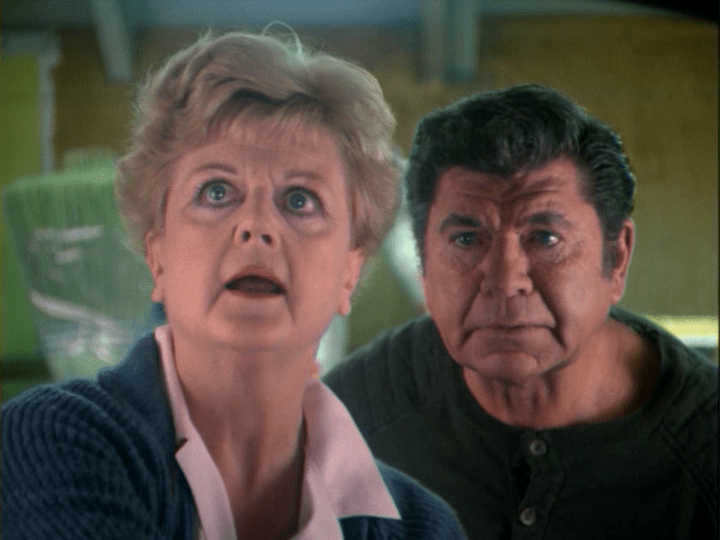
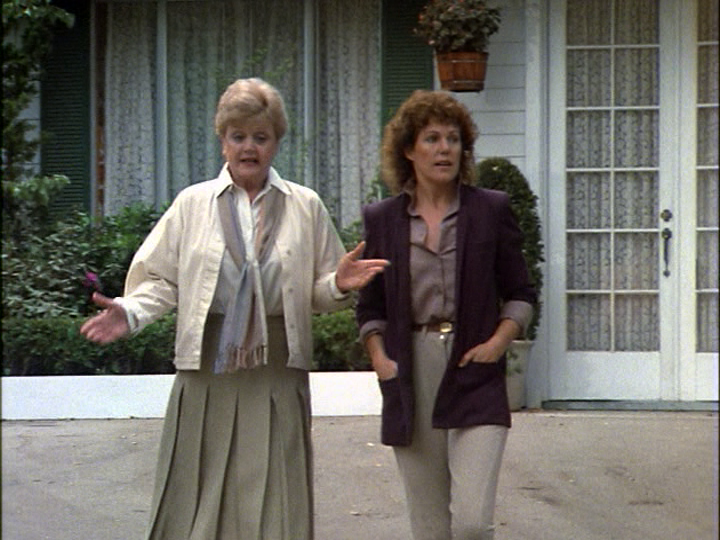
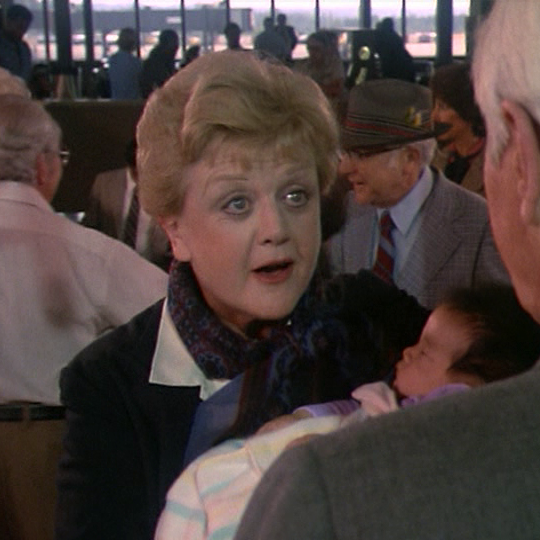
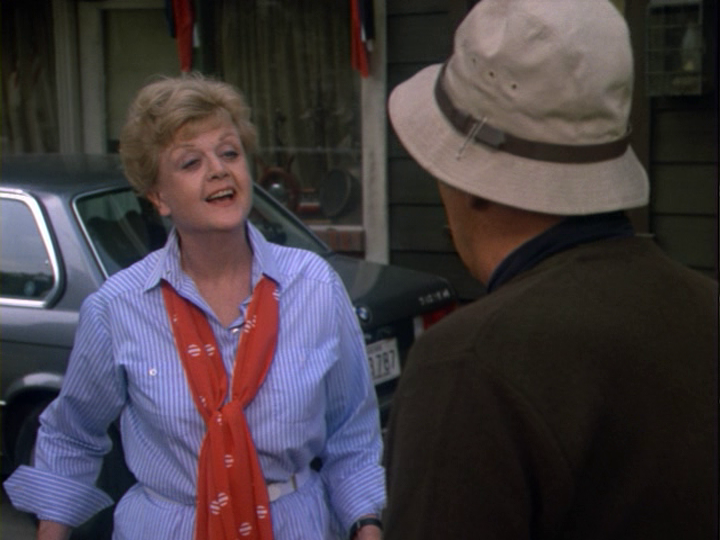
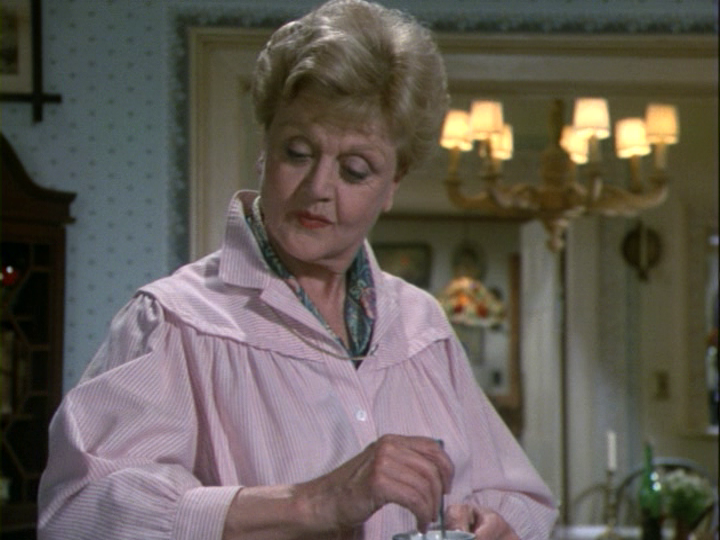
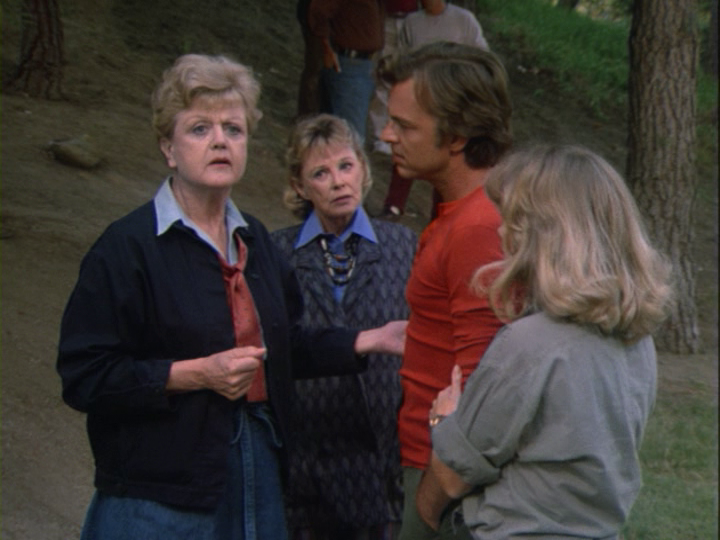
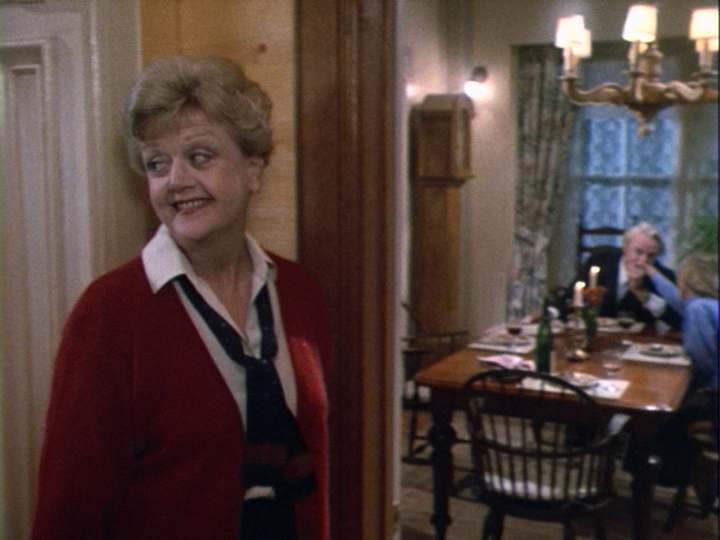
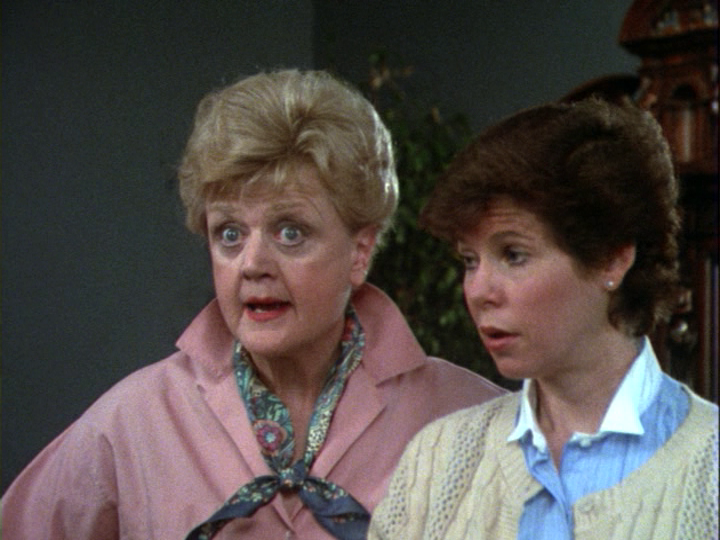
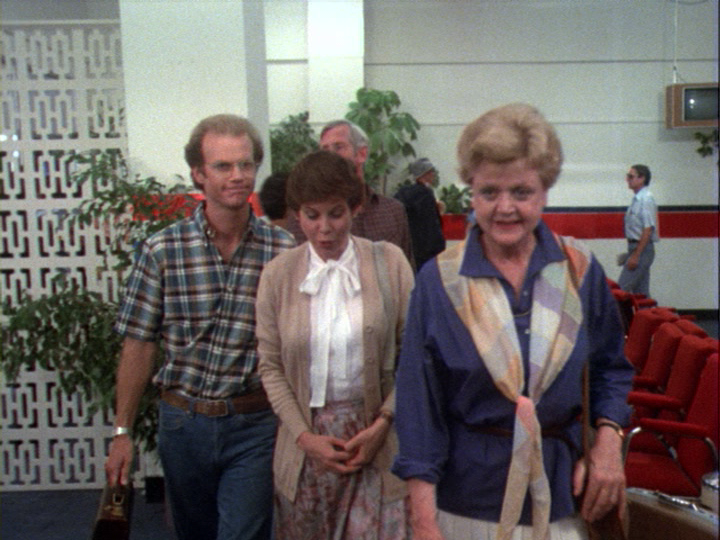
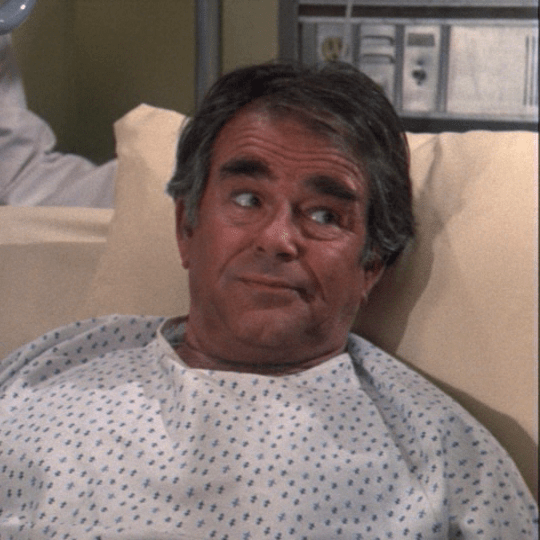
Captain Ethan Cragg (Claude Akins) is one of Jessica’s Cabot Cove friends. He is very protective of Jessica, and has a warm, but combative, relationship with the Cabot Cove Sheriff, Amos Tupper.
Captain Cragg runs Cragg’s Charter Services from his boat out of Cabot Cove. He comes to the rescue by land (S1 E7: “Hit, Run and Homicide”) and by sea (S1 E2: “Deadly Lady”). When he’s not volunteering for the Coast Guard or helping the Sheriff, Ethan’s hobbies include fishing, softball, and arcade games.
Unfortunately, Ethan only appears in Season 1. His character is more or less replaced by Dr. Hazlitt later in the series. I wish this wasn’t the case, I really like the character of Ethan. I feel like there is room in Jessica’s life for more than one gruff but well meaning gentleman at a time. Plus, Ethan has a certain… Gorton’s Fisherman appeal that I miss in later seasons.
Hello and Welcome!
For reasons unclear to me, this is by far my most popular post. Welcome to Murder She Wrote, She Wrote! If you are seeking Captain Cragg, I hope you’ve found what you were hoping for.
Here are some more posts featuring the good captain:
Artist’s interpretation of Captain Joshua Wayne during the American Revolution (1775 -1783) Pirate pirated from supersimple.com
Cabot Cove loved Captain Wayne as a colorful Yankee outlaw. Golden Age pirate lore is very popular in the United States, and an 18th century privateer like Captain Wayne would have been close enough to the real thing to inspire the collective imagination of a community.
Cabot Cove’s annual Founders Day celebration (S1 E7: “Hit, Run and Homicide”) is a moment of reckoning for the community. Does Jessica tell the rest of Cabot Cove that Wayne fought as a loyalist during the American Revolutionary War? It appears this fact may have shipwrecked his legacy as a founding father. Cabot Cove moves on to other historical heroes later in the series.
Forty years ago, Cabot Cove was created to be an ordinary American small town. Its location on the coast of Maine endowed the Cove with enough plausible local color to distinguish it from other beloved places in T.V. Land. Throughout the MSW series, the denizens of Cabot Cove grappled with the limitations of the historical and cultural narratives that were integral to the community’s shared identity. In this way, Cabot Cove reflects the challenges that real communities, large and small, can face when cherished stories and beliefs do not stand up to historical scrutiny.
In other words, as we like to say here at MSWSW, fictional facts matter. While this post may strike you as a little uneven in tone, sometimes it’s important to be earnest. The stories we tell, whether intended to be historically accurate or pure fiction, are fundamental to how we perceive ourselves.
Land Acknowledgement
Purpose
A land acknowledgment is one way to recognize and honor the indigenous people who were the original inhabitants of a place to which you now belong. It is a way to call attention to the complex, uncomfortable heritage of colonialism and displacement that we all share. It is a beginning point, and a declaration of intention to continue to act in support of current day indigenous communities. If you are interested in learning more about land acknowledgements, the Smithsonian’s National Museum of the American Indian and the Native Governance Center both provide guidance.
Suitability
Here at MSWSW, we debated whether it was needful or appropriate to compose a land acknowledgment for Cabot Cove, especially because the geographic location of the town can be pinned down fairly specifically. Ultimately, we decided that, even with the best intentions, to make such a statement for a fictional place would be misguided. Instead, we would like to refer interested readers to the land acknowledgment made by the Boothbay Railway Village Museum, which is located in the same area of Maine.
Commitment
Acting in support of indigenous communities should not be limited to a single statement, to a single day (or month) on the calendar, or to a single blog post. The presence and influence of indigenous communities and cultures are interwoven and inseparable from the American identity, and, likewise, the very American television series Murder, She Wrote. Therefore, here at MSWSW, it is our intention to continue to highlight, celebrate, and reflect on the importance of indigenous people, communities, and cultures as we progress through our MSW journey.
Personal Note
Here at MSWSW, we (I) like to keep the focus on Murder, She Wrote. I’ve intentionally chosen to avoid personal details for many reasons. However, because this post clearly demonstrates my personal desire to recognize and honor indigenous communities and cultures, I want to note my personal connection to the Little Shell Chippewa, the tribe of my mother and my grandmother.
What’s more American than lots and lots of flags? Cabot Cove proudly displays quite a collection.
The Bennington Flag
The Bennington Flag originated during the American Revolutionary War, and has thirteen stars and stripes for the thirteen original colonies. The 76 refers to 1776, the year of the Declaration of Independence was signed. It’s colloquially known as the bicentennial flag, because it was a popular symbol during the United States’ Bicentennial in 1976.
The Bennington on Founders DayThe Bennington at Hill House
The Maine State Flag
Maine State Flag at the Sheriff’s station
Also in the Founders Day picture above, to the right of the Bennington, is (probably) the Maine State Flag. Like a lot of other state flags, it’s the state’s coat of arms on a blue background, so it’s difficult to identify from a distance. Fortunately, we can see it more closely at the Sheriff’s station.
The Flag of New England
The Flag of New England and The Flag of Lincoln County, Maine in Cabot Cove
This is a variant of the unofficial Flag of New England, which, as a long time resident of New England, I don’t think I’ve ever seen in the field. It’s also the official flag of Lincoln County, Maine, which incidentally supports MSWSW’s hypothetical location of Cabot Cove.
The Gadsden Flag
The Gadsden Flag in Cabot Cove
This is the Gadsden Flag, another flag from the American Revolution. This flag has long been associated with American libertarianism. More recently, it has been used as a symbol of the American alt-right.
In response to its adoption by the alt-right, numerous satirical variants of the Gadsden Flag have emerged, because, left, right, and center, Americans really love their flags.
The Tale of the New England Clambake: Good Eats, Bad Romance?
The romantic origins of the New England clambake are more myth than reality. The narrative that indigenous people introduced early colonial settlers to the clambake as an ancient foodway is not historically accurate. The clambake originated in 19th century Rhode Island, and was widely incorporated into the United States’ evolving national identity following the Civil War. (For scholarly rigor and more details, please refer to The Oxford Companion to American Food and Drink.)
Despite its prosaic origins, a New England clambake is still worthwhile, distinctive, and delicious. In theory, a barebones beachy version can be accomplished using only fished and found objects, which lends it a certain scavenger/desert isle “I want your everything as long as it’s free” kind of romance.
Hello, and welcome back to Cabot Cove for another cozy murder mystery. Before reading further, please watch the episode, there will be spoilers! If you’ve got a beach nearby, this episode pairs nicely with a New England Clambake.
There are four parts to this episode guide:
This is Part 1, an introduction including the setting, characters, and context of the episode.
Part 2 is a detailed timeline of the episode’s events.
Part 4 is a collection of fun extras that I like to call Bonus Features.
A Crash Course in Road Safety
Welcome back to Cabot Cove for Jessica’s second collaboration with Sheriff Tupper. Or is it? Either way, there’s an absolute fleet of autos that make this episode go. Even the famously non-driving Jessica gets her turn behind the wheel.
In the absence of evidence to the contrary, the first guiding principal I use in my work on the MSWSW canon timeline is to place an episode’s events before, but as close as possible to, the initial airdate. This episode first aired on Sunday, November 25, 1984.
The Oeuvre of J.B. Fletcher
This episode doesn’t include any details about J.B. Fletcher’s writing, although we do get to see the author at work at her typewriter. When Jessica first meets Leslie Andler, the newcomer says she’s read Jessica’s “books” plural, which means the events of this episode took place no earlier than May 1984.
The Clambakes and Cookouts
Founder’s Day Clambake and PicnicA Cookout with Daniel
The denizens of Cabot Cove are outdoors enjoying warm weather throughout this episode. The town holds a celebratory picnic, Daniel hosts a cookout, and the rose bushes are in bloom. All of this points to a warmer time of year, if not strictly summer, then certainly sometime between May and September.
The Unbroken Ice
With all that lovely warm weather, the ice between Jessica and Sheriff Tupper strikes one as a bit strange. Just a few episodes ago, Amos unhesitatingly called Jessica as soon as there was a whiff of foul play.
And yet, here they are, smack dab in the middle of episode 7, acting like they’ve never even thought of cooperating on a case.
Jessica and Amos in S1 E7, making tentative overtures as tepid as that Styrofoam cup of coffee.
It’s my theory that this episode is, in fact, the first time Jessica and Amos work together. Further, the sweeping aerial shots of rugged coastline and the majestic musical score give the opening scenes of this episode a premiere aesthetic. I feel almost certain that this episode was originally intended to air as the series’ first episode after the pilot, or at least as the series’ first episode set in Cabot Cove.
So, in terms of our MSW canon timeline, I’ve decided the events of Hit, Run and Homicide occur before those of Deadly Lady, explaining the differences in Jessica and Amos’ rapport, and placing Hit, Run and Homicide sometime between May and early July 1984.
The Players
In order of appearance, the locals we’ll meet this episode, plus a few from away:
We continue to build our list of Cabot Cove locals this episode. Special mention goes to Lois Hoey, in her second, and sadly, last appearance as Jessica’s friend and a Cabot Cove lady about town. Other denizens we encounter this episode include Letitia, Nurse Bates, and Cora.
The Automobiles
A veritable fleet of vehicles provides the driving force for this episode. Some of these autos almost have as much personality as the actual characters. In order of appearance:
The Red and Gray Van
Large, looming, and ominous, what is the purpose of this mysterious vehicle, and who is the shadowy figure behind the wheel?
The Driverless Station Wagon
Oh, the dream of the safe, reliable, self-driving car. Forty years later, and we still haven’t figured it out.
Ethan’s Old Pick Up
A vehicle beatified by its service and honest wear, it is a reflection of the man behind the wheel. This must be Ethan’s business-mobile, as it bears the name and crest of Cragg’s Charter Services.
Leslie, the New Sedan
Ick, ick, triple ick upon the writers’ room, for creating a character who voluntarily and needlessly likens herself to a sedan. Girl, if you’re going to objectify yourself, be a Porsche, be a Maserati, be a pink Cadillac. Or, you know, don’t.
The Rental
While a Bostonian like Tony could get by without a car, it’s unusual for a traveling saleslady not to own one.
The Moving Van Heading North on Highway 27
This van is headed towards Augusta, and away from the truth.
The Panda
Cabot Cove’s finest serve and protect in this law enforcement classic.
The Arcade Game
Ethan and Jessica play the 1983 arcade classic Spy Hunter. Jessica’s turn at the wheel inspires this episode’s aha moment.
“It is not down on any map; true places never are.”
Herman Melville, Moby-Dick
With apologies to Melville, I am going to attempt to locate the beloved, unreal-yet-true place of Cabot Cove on a map, using information gleaned from multiple episodes of Murder, She Wrote.
A Real Island
In the series premiere, “The Murder of Sherlock Holmes,” we are introduced to Cabot Cove as a small coastal town in Maine. The second episode of the series, “Deadly Lady,” is set in Cabot Cove. In this episode, we learn a bit more about where Cabot Cove is located based on it’s distance from a real place in Maine, Monhegan Island.
“Deadly Lady” opens in the middle of a hurricane. A yacht is stuck out in the storm, and the Coast Guard has picked up its distress signals. The next morning, when the yacht’s passengers are rescued and brought ashore in Cabot Cove, they explain that they were 3 miles due east of Monhegan Island. Although this story is later retracted, it is accepted as a plausible location.
Watercraft use VHF (very high frequency) marine radio to communicate. The range of a VHF radio can vary due to a number of factors. Based on some cursory research, I found a good basic explanation here along with a handy diagram:
According to this diagram, we can estimate the maximum range of a VHS radio using a yacht height (12M) mast to be 30-33 miles. Therefore, we can place Cabot Cove within a 30 mile radius of Monhegan Island. This narrows the possible location of Cabot Cove to the circle shown on the map below:
There are at least two Coast Guard stations within this radius that would have been active in 1984, in Boothbay and Rockland. It stands to reason that Cabot Cove would be at least as close to Monhegan Island as either Coast Guard station for Captain Ethan Cragg to be called on as a first responder.
A Real Road
In S1 E7: “Hit, Run and Homicide” we learn more about Cabot Cove’s location relative to other real places in Maine. A key piece to the puzzle is Route 27. It’s referenced twice in the episode. It’s mentioned by Ethan Cragg as he discusses a search for a missing vehicle in Cabot Cove.
We also learn from Ethan’s statement that Cabot Cove is south of Augusta, which is consistent with the rest of the information we have so far. The portion of Route 27 that is within 30 miles of Monhegan Island is highlighted on the map above.
The other reference to Route 27 is easy to miss, but so crucial to locating Cabot Cove that it basically renders everything else, including the lovely map above, as pretty much moot. There is a scene between Ethan and a visitor to Cabot Cove, Dean Merrill, at the docks.
In the center background, beneath the speed limit sign, is the sign for the road immediately behind Merrill, Route 27. Again, in reference to the map above, the gold star represents the relatively limited area where Maine’s Route 27 runs along the coast.
A Real Cove?
That gold star narrows the location of Cabot Cove to Boothbay and Southport Island, the former being the larger and more likely spot. The area, similar to the rest of the ragged Maine coastline, is dotted with numerous coves and inlets. In the center of Boothbay Harbor is a small cove, Mill Cove. Until and unless there is evidence to the contrary, that is where the MSWSW search for Cabot Cove will come to rest.
Hello, and welcome to the fourth and final part of my Lovers and Other Killers episode guide. If you haven’t already seen it, I recommend starting with Part 1. There are four parts to this episode guide:
Part 1 is a introduction, including the setting, characters, and context of the episode.
Part 2 is a detailed timeline of the episode’s events.
This is Part 4, a collection of fun extras that I like to call Bonus Features.
Bonus Features
Gender Politics 101
This episode examines conventional gender roles, norms, and double standards, but with a critical eye, or a blind one?
The Bechdel Test
This is a murder mystery in which the sleuth, both murder victims, and the murderer are all women. However, this episode comes very close to failing the Bechdel test, because almost all the conversations between the female characters are about men. Allison Brevard dies without any dialogue. Lila has a single conversation, it’s with Jessica, and it’s about David. Except for a brief exchange about the secretarial job posting, Jessica and Amelia only talk about Edmund and David, until their final conversation about Lila’s murder.
Does it matter? This series is built on the appeal of a strong, intelligent, multifaceted woman who goes everywhere, knows everyone, and is good at just about everything. No one could accuse Murder, She Wrote of representing women in a limited way, right? Right?
Tale as Old as Time
Ok, maybe not tale as old as time, but certainly a trope as old as the workplace. Amelia, the secretary, is in unrequited love with her boss. Likewise, David, the other secretary, is also romantically interested in his boss. Neither of these relationships gets off the ground. However, Lila, the teaching assistant, is allegedly having affairs with at least two of her superiors at the university, with disastrous consequences.
Power-imbalanced workplace relationships like these are often portrayed as both prevalent and romantic, but they are potentially very destructive, and arguably non-consensual on the part of the subordinate. It’s frustrating to me that neither Professor Lowery nor Dean Gerard seem to fear any professional consequences after pursuing a (murdered) teaching assistant. And yes, while it’s possible for a woman in a position of power to exploit a subordinate in this way, the reverse is much more common.
Men and Women Can’t Be Friends?
The premise of When Harry Met Sally (1989)
This episode seems to be of two minds when it comes to platonic relationships between men and women. Edmund and Jessica are old friends, but now that they are both widowed, shipping them seems almost unavoidable, from Edmund’s playful assertion that Jessica “picked the wrong one” to Amelia’s jealousy of Jessica as a perceived rival. On the other hand, Jack the jealous husband easily dismisses the exceptionally attractive David as simply a friend of his wife, and nothing more.
The Pick Up Artist
The most interesting and memorable dynamic of this episode is the relationship between David and Jessica. David’s interview is basically a pick up routine, and it’s calculated to leverage Jessica’s ideals about gender equality. It’s how he (literally) gets his foot in the door.
The rest of his interview plays out like a conventional pick up. David tricks and charms Jessica into letting down her guard.
And once he’s won her approval, he even has the audacity to neg her writing.
David would like Jessica to believe that all her misgivings about him are rooted in her own gender biases. And it works, for a while, at least. When her confidence in him does begin to flag, it rebounds seemingly as an indignant response to Andrews’ and Edmund’s sexist and ageist aspersions about their relationship.
In the end, David Tolliver is a flawed, but ultimately innocent, character who may sincerely care for Jessica. So, is he a modern young secretary whose genuine interest in a successful older woman upends 1980’s gender norms? Or, is he a creepy pick up artist whose manipulative behavior reinforces conventional narratives?
It’s OK to Say No to a Man. Here’s How.
The gender politics of this episode are pretty muddy. However, in a world where gender inequality and double standards still exist, Jessica demonstrates how to confidently communicate and enforce her personal boundaries with a man who would transgress them. This may not seem revolutionary or heroic, but it is quietly empowering to generations of women inured to accommodating men.
Do crimes.
First Murder!
Victim: Allison Brevard
Culprit: Anonymous criminal
Motive: Burglary (Greed)
Weapon: XL String of Pearls (Garrote)
Before Our Eyes: Poor Allison is strangled on-screen
Crime Scene: A posh townhouse
Discovery: 4 minutes, or 8% through
Second Murder!
Victim: Lila Schroeder
Culprit: Amelia the Secretary
Motive: Jealousy (Greed)
Weapon: Longshoreman’s Hook (Pointy Object)
Done Deed: The fatal blow is struck off-screen
Crime Scene: An abandoned warehouse
Discovery: 24:30, or 50% through
Other Crimes!
Reckless driving: Amelia, for that night at the Lumberjack Inn
Assault and battery: Amelia, for pushing Jessica down the stairs
Obstruction of justice: David Tolliver, for lying to the police about his whereabouts the night of Allison Brevard’s death, and the nature of his relationship with Lila Schroeder.
Trespass: Amelia, Lila Schroeder, and Jessica Fletcher, for their several encounters at an abandoned warehouse. David Tolliver, for inviting himself into Jessica’s hotel suite one too many times. And, while it might not have been trespassing, honorable mention to that time Jessica gained access to the Sequoia University men’s gym.
There is a theory that Jessica Fletcher is the most successful serial killer of all time. It’s pretty easy to see how she might have done it this time – instead of Amelia, it was Jessica who stuck a longshoreman’s hook into Lila. Why? I imagine Jessica might have found Lila’s phone etiquette a bit lacking, and she hates people when they’re not polite.
Tropes, Devices, and Other Conventions
Mystery Tropes
Love Triangle Hexagon
If you count Emily Lowery, a great gal who’s hard to fool, there are three men (Jack, Edmund, Todd) and three women (Lila, Amelia, Emily) in this episode’s proverbial love triangle, except that three and three makes six, which adds up to a love hexagon.
Oddly located corpse
Allison Brevard is killed in her own home, which is chillingly realistic, but Lila is murdered in a more unusual place, a spooky abandoned warehouse.
Suspicious Phone Call
It’s suspicious when we overhear only part of a character’s phone call, or we don’t know who’s on the other end. There are plenty of on-screen phone calls this episode, but each time we either know the identity of the other party, or we see both sides of the call.
There is one truly suspicious phone call this episode, the one that results in Jessica heading to Professor Lowery’s office on Wednesday night. It’s a crucial element of the plot, and yet no part of it is depicted on screen. In this way, it’s a doubly suspicious phone call, because it casts suspicion on both the person who allegedly placed the call, and the person who claimed to have received it.
Plot Devices
flashback
There is one brief flashback during the final conversation between Jessica and Amelia, showing Amelia managing Edmund’s bills, specifically the bill for the inflatable raft. I don’t think it’s necessary, especially because it only shows the audience something we’ve already seen, rather than some new detail. The popcorn-worthy flashback we really deserve is Amelia wielding a longshoreman’s hook during her encounter with Lila in the abandoned warehouse.
bookends
Jessica’s presence in this episode begins and ends symmetrically, with her arrival and departure at the Seattle airport, each time holding in her arms an impromptu totes adorbs travel buddy.
Hello, with a baby named Buddy
Goodbye, with a bear we’ll also call Buddy
This was a really masterful, subtle choice by the writers. The episode itself actually opens and closes on two very dark scenes, Allison Brevard’s murder and David Tolliver’s intense stare. Jessica bookends her own presence in the episode by literally carrying in and carrying out the cozy.
MSW Tropes
Door of Truth
An offhand word from David – that a “person” called – is the last clue Jessica needs to solve the mystery.
Confess Thyself
In typical MSW fashion, Jessica confronts the killer alone and persuades her to confess.
Bait of Falsehood
Jessica lies to Amelia to trick her into confessing to Lila’s murder. Jessica tells Amelia that Edmund is about to be arrested for Lila’s murder, which is false. She also says Edmund doesn’t have an alibi, which is a teeny tiny plot hole, since the audience doesn’t know if that is true or false.
I Play the Villain
Often MSW will give us a character who I think of as The Jerk Who Isn’t The Murderer. I think that the writers intended Jack for this role; however, in my opinion, Edmund is the biggest AH this episode. He’s callously indifferent to Amelia’s feelings for him. Jessica tells him that Amelia is in love with him early on, so his final claim that he “had no idea” is BS. Worse, he takes advantage of a vulnerable subordinate, Lila, and after she’s dead, coldly dismisses the relationship as disposable, saying he “could have handled it.”
Smile and Smile
In order to finish on an up note, there’s almost always a cheesy freezeframe of Jessica laughing or otherwise mugging in response to the last, generally pretty lame, joke of the episode. By contrast, this episode is memorable for it’s unsettling final image of David Tolliver’s menacing stare after Jessica.
What She Wore
How to Wear a Scarf
We get one scarf from Jessica this episode, as part of her travel attire.
Jessica’s Best Look
I didn’t find many noteworthy looks from Jessica this episode. My favorite is this navy blue sweater with a crisp collar and a classic trench- clean, timeless, and practical.
Jessica’s Least Best Look
Dear Lord, lead us not into sweater vests.
Best Look Overall
This sweater, I guess. It really says 1984 and does a nice job of bringing out the blue of his eyes.
Least Best Look Overall
This sweater, again, because even though I kind of like it, I also really hate it.
The Rest of the Story
David Tolliver seems like a perfect character to reencounter in the MSW universe, but we never see him again. Here’s what happens instead.
Like any pick up artist, David doesn’t enjoy losing a quarry, but after Jessica gets on that plane back to Boston, he’s ready to move on, both figuratively and literally. As a person of interest in two recent murders, David finds Seattle a bit stifling, and decides to relocate. His taste for older, wealthy women takes him to Lake Tahoe and then to Las Vegas. He enjoys a life of romantic conquests, luxury, and leisure, until he becomes intimately involved with the wrong man’s mother. David disappears. He’s found decades later, when a severe drought causes the Lake Mead water level to drop dramatically.
Extra Credit
Similar works to this episode are difficult come by.
The title “Lovers and Other Killers” was inspired by Lovers and Other Strangers but the likeness ends there.
While Dorothy Sayers’ Gaudy Night does not resemble this story, it is an excellent murder mystery that contends with gender politics and university life.
Hello, and welcome to Part 3 of my Lovers and Other Killers episode guide. If you haven’t already seen it, I recommend starting with Part 1. There are four parts to this episode guide:
Part 1 is a introduction, including the setting, characters, and context of the episode.
Part 2 is a detailed timeline of the episode’s events.
This is Part 3, my analysis of the episode.
Part 4 is a collection of fun extras that I like to call Bonus Features
Episode Analysis
Show Your Work
This episode differs from a typical MSW story arc because the vast majority of screen time is invested in characters and events that are ultimately unrelated to the central murder. We often think of these elements as red herrings, added simply to distract the audience or obfuscate the real plot. In this case, though, the time invested in developing ancillary characters and presenting plot points that are ultimately left unresolved is time well spent. It very effectively builds a dark and pervading sense of unease that elevates this episode, even though the central murder plotline turns out to be pretty unremarkable.
Fair Play Pause Point
The moment Jessica solves the mystery is what I like to call the fair play pause point. At this point in the narrative, if the writers have played fair, we the audience should have all the clues we need to solve the mystery. There are two murders this episode, but Lila’s murder is the central mystery, and the one that Jessica solves. Her aha moment is the realization that the suspicious phone call summoning her to Professor Lowery’s office was placed by a “person” of unknown gender, rather than a man. At this point, does the audience have enough information to conclusively determine who killed Lila?
Clues!
Caller ID
I’m going to take Jessica’s “person” reasoning one step further. All of the characters this episode are cis-gender men and women. So, if the fact that the caller was not necessarily a man is revelatory, we can conclude that the possibility of the caller being a woman is significant. There are only two female characters left alive at this point in the narrative, Jessica and Amelia. Therefore, the possibility that Amelia is the caller, and therefore the person responsible for pushing Jessica down the stairs, is important.
A DArk Colored Car
During their open air and cold coffee brunch, Edmund tells Jessica that on the night of Allison Brevard’s murder, he and Lila were harassed by the driver of a dark colored car. After brunch, Jessica returns to campus and gleans from Todd that he shares a yellow station wagon with his wife. This tells us both that Jessica thinks the identity of the driver of the dark car is important, and that it isn’t Todd Lowery. Earlier in the episode, we were shown David’s red sports car, so we can also eliminate him as the driver of the dark colored car. That leaves two possible people who may have harassed Lila and Edmund that night: Jack and Amelia.
An Inflatable Raft
Early in the episode, we learn that Amelia manages Edmund’s bills, and therefore knows about his personal purchases, like inflatable rafts, and, presumably, charges from the Lumberjack Inn. This reinforces the possibility that Amelia knows about Edmund and Lila’s affair, but it does not eliminate Jack as the harassing driver, or as his wife’s murderer.
Suspects
To revisit an observation from Part 1, this episode has a small cast, and therefore, a short list of potential suspects. So, who among them had motive, means, and opportunity to murder Lila?
Motive
Five characters potentially have motives for Lila’s murder. Edmund Gerard and Todd Lowery were both allegedly involved in potentially compromising affairs with her. Jack was jealous and possessive of his estranged wife. Amelia may have been jealous of Lila if she knew about Edmund’s affair. David may have wished to silence Lila in order to create an illusion of an alibi for himself for the night of Allison Brevard’s murder.
Means and Opportunity
In this case, means and opportunity are inseparable, because Lila was killed with a weapon available at the scene. The only suspect we know had an alibi for the time of Lila’s death was David, who was under police surveillance at the time. The remaining four characters, Edmund, Todd, Jack, and Amelia, do not have alibis for Lila’s murder.
That DArk Colored Car Again?
Unknown to Jessica at the time, but shown to the audience, a dark car drove away from abandoned warehouse 33 moments before Jessica discovered a dying Lila. Therefore, in addition to David, we can eliminate Todd Lowery and his yellow station wagon. This leaves Edmund, Amelia, and Jack as the remaining suspects. If we assume the dark car at the warehouse is the same dark car that harassed Lila and Edmund near the Lumberjack Inn, we can let Edmund out. But, as Amelia says, lots of people drive dark colored cars.
J’accuse!
This episode fails to make a clear cut case against any single suspect. Instead, a lot of time is spent debating David’s guilt or innocence, when he’s literally the only suspect to have an alibi.
The clues only indirectly implicate Amelia. She is one of two suspects who could have harassed Edmund and Lila near the Lumberjack Inn. She is the only non-man “person” who could have lured Jessica to Lowery’s office. However, that doesn’t mean she is the only person who could have murdered Lila.
Unsolved Mysteries
In fact, this episode transgresses (or transcends?) the norms of the genre by leaving a lot of mysteries unsolved.
Jessica’s Briefcase
Did David rifle through Jessica’s briefcase? If so, why?
Jack’s Alibis
We never learn if Jack, who should have been the lead suspect in his wife’s murder, had an alibi for that night. Yet both Lt. Andrews and Jessica are inexplicably uninterested in him. In my opinion, this is an oversight that weakens the story. Another weak point is the solution to Allison Brevard’s murder, which is wrapped up in a way that feels abrupt and half hearted. I think the writers missed an opportunity: What if Jack was the burglar who killed Allison Brevard? By making Jack the culprit, this element of the plot would have been more fully incorporated into the main storyline. Further, Jack would then have been conclusively eliminated as the dark car driver at the Lumberjack Inn, making the case against Amelia stronger as well.
Lila’s Other Man
Who was the other man of whom Jack was so jealous? We know it wasn’t David, and Jessica suspected it was Professor Todd Lowery. Jessica confronted Lowery in her Wednesday lecture in such a brash and public way that David heard gossip about it shortly afterward. Amelia must also have heard, because she decided to capitalize on her suspicions of Lowery in order to lure Jessica into a trap. My theory is that Edmund also heard about the dramatic exchange, and then decided to exaggerate Lowery’s alleged affair with Lila. Was Lowery really as subtle and dangerous as Edmund would have had Jessica believe? I think about that yellow station wagon, and his wife, Emily, a great gal who’s tough to fool, and it seems to me that his relationship with Lila likely wasn’t much more than a misguided flirtation. On the other hand, we know for certain that Edmund had repeated sexual encounters with Lila. When Jack won’t answer Jessica’s questions about other men, I think it’s because he sees Edmund, and not Todd, as the real threat to his marriage.
David’s Other Woman
What was the nature of the relationship between Allison Brevard and David? Even though he was innocent of her murder, we can’t quite trust David’s story. And, since we’re stuck in the dark about Allison, we’ll also never have insight into David’s true intentions towards Jessica.
Episode Rating
Four out of four stars – this is one of my favorite episodes!
I love this episode. It’s menacing, and ambiguous, and untidy, and we can’t quite get a hold on the whole truth. We never fully understand Jack, or Todd, or Edmund, or especially, and most memorably, David.
What kind of person is David Tolliver, and why is he interested in Jessica? One popular take is that David’s combination of youthful good looks, pervading creepiness, and preoccupation with older women is inspired by Norman Bates. We know the MSW writers are fans of Psycho and Alfred Hitchcock. The comparison is apt, and probably correctly attributed. However, David Tolliver gives me the creeps in a different kind of way, which I humbly submit in Part 4: Bonus Features.
Hello, and welcome to Part 2 of my Lovers and Other Killers episode guide. If you haven’t already seen it, I recommend starting with Part 1. There are four parts to this episode guide:
Part 1 is a introduction, including the setting, characters, and context of the episode.
This is Part 2, a detailed timeline of the episode’s events.
Part 4 is a collection of fun extras that I like to call Bonus Features.
The Timeline
With the exception of the opening and closing scenes, the events of this episode take place over a five day period.
One Fateful Night a Week or So Beforehand
Allison Brevard, a woman of wealth and maturity, is strangled by a masked intruder in her Seattle townhouse. This opening scene sets an unusually dark and menacing tone for the episode. The scenario is more realistic, and therefore scarier, than a typical MSW murder, although the acting puts it a little over the top.
Meanwhile, and not shown, Edmund and Lila spend the evening together at the Lumberjack Inn. Shortly before midnight, on their way back to town, they encounter a dark colored car driving erratically.
Day 1 – Sunday
Sunday Morning
This call is about an Airplane!
Instead of her editor, Marilyn Dean, Jessica arrives with the most adorable baby (and two nearly as adorable nuns). Jessica’s just one of those people you’d immediately trust with a baby, I guess.
After old friend and Dean of Students Edmund Gerard begins to worry, Jessica deplanes from Boston flight 507.
Fortunately, Jessica’s conversational Mandarin is up to snuff.
It’s a lively Sunday afternoon on campus. Amelia must have come in specially to give Jessica the VIP treatment.
The sun is still shining on Drumheller Fountain later that afternoon, when Jessica turns down Edmund’s offer to stay at his place. They reminisce about Saturday nights at Kappa Gamma Chi with Frank Fletcher, before Jessica and Frank were married.
Sunday EVening
David Tolliver uses his charm and skills in a very calculated way to persuade Jessica to hire him as her secretary, something I discuss further in Part 3.
In this scene with David, Jessica is in her hotel room, wearing a robe, which conveys vulnerability and intimacy.
I invite you to compare it with another scene in a hotel room with a robe and a younger man, from S1 E4: Hooray for Hollywood, in which Angela uses a robe to convey a sense of intimacy, but also one of ease, rather than vulnerability.
Day 2 – Monday
Monday Morning
Not shown: David returns to Jessica’s hotel suite to begin his work as her secretary, presumably at the agreed upon 10 am.
Monday Afternoon
Jessica’s series of guest lectures begins with a bang. We learn that Professor Lowery’s wife, Emily, is very tough to fool. Edmund has to bail on his dinner plans with Jessica to attend a faculty meeting.
Monday Evening
At nearly 7 pm, David persuades Jessica to join him for a fancy schmancy Chateaubriand dinner. Afterwards, Lt. Andrews requests David accompany him to Seattle PD HQ for some “routine” questioning about the murder of Allison Brevard.
Monday Night
After two hours’ questioning at PD HQ in the historic and picturesque Yesler Building, David is finally able to return Jessica to her hotel in his shiny red 1984 Alfa Romeo Spider Convertible. Jessica notices they are being tailed by an unmarked car.
Incidentally, the Sacred Circle Gallery is still a going concern, although it’s no longer located in Pioneer Square.
Day 3 – Tuesday
Tuesday Morning
Early the next day, Jessica returns to Pioneer Square ISO Lt. Andrews. We get a brief glimpse of his humanity (Bagel! Coffee! Sports Page!).
Jessica volunteers some pert observations and Andrews offers some unsolicited advice. Jessica says she’s been in town for two days, which tracks. Neither party enjoys the exchange, but both seem to agree that David doesn’t seem like a killer.
Jessica cabs back to her hotel, where she is unpleasantly surprised to find David availing himself of the amenities.
Did he rifle through her briefcase, and then leave it unlatched and colorfully askew? We’ll never know for sure, but it’s definitely time for Jessica to set some important boundaries.
Tuesday Afternoon
Back on campus for her afternoon lecture, Jessica’s attitude about David seems to do a 180 in the face of Edmund’s suspicions and admonitions. Maybe she realizes she’s rushing to judgement just like Edmund, or maybe she’s piqued that for the second time that day, another man is misconstruing her relationship with David. Whatever the reason, she decides to continue to employ him as her secretary, despite his murky connections to a murdered woman.
Tuesday Evening
At a very dated stock footage dive bar, Lila uses the payphone to plan a meetup with Jessica, and we get to see how much of a jerk her estranged husband is. Jack is jealous of another man, but he doesn’t say who.
Incidentally, this is Jessica’s second trip to the west coast for which she packed multiple robes. She wears the same travel outfit coming and going (see Plot Devices: Bookends in Part 4). So, the necessity of travel wardrobe economies is not unknown to her. She just prioritizes loungewear. And this robe seems to be a favorite, since she also wears it in S1 E4: Hooray for Homicide.
Tuesday NIght
At 10 pm, down by the docks, Jessica warily enters abandoned warehouse 33. In a world before cell phones, she has the sense to ask the cab driver to wait. A dark car drives off, and poor Lila dies before she can tell Jessica anything.
Alas, poor Lila, we knew her not.
Jessica, aghast and agape.
After learning the reason for Jessica and Lila’s assignation, Lt. Andrews immediately suspects David of Lila’s murder. However, David was under police surveillance all night, and he’s in the clear. Back at PD HQ, David claims that he was with Lila the night Allison Brevard was killed, and that jealous husband Jack must have killed Lila.
Bell Street Pier 66 (the actual location of the fictitious “Warehouse 33”) was reconstructed in the 1990’s and is now a glam tourist spot and cruise ship depot.
Day 4 – Wednesday
Wednesday Morning
Not shown: After yet another long night at PD HQ, David resumes his work as Jessica’s secretary, presumably at the previously agreed upon 10 am.
Wednesday Afternoon
Back on campus for another lecture, Jessica first stops by Dean Gerard’s office, and has a cringey heart to heart with Amelia about Edmund. They also talk about David, and crucially, that Jessica still thinks he’s innocent.
Jessica’s next stop is what appears to be the Sequoia University men’s gym. Whatever Jack felt for Lila while she lived, he’s not exactly prostrate with grief the day after her murder. Instead of asking Jack about his alibi for the previous night, Jessica is more interested in finding out who Lila was seeing. According to Jack, David was just a friend. And Todd Lowery? Jessica seems to just be fishing at this point, and Jack declines to answer.
Is this conspicuous deshabille simply gratuitous, or does it show us a man who literally (and, therefore, figuratively) can not be hiding anything?
Jessica’s interview with Jack makes her late for class. Her lecture devolves into a combative, intense and utterly unprofessional repartee with Professor Lowery. It takes poor Todd a hot minute to realize that Jessica suspects him in Lila’s murder. The audience might also need that time to catch up. Until this point, the only indication that there was anything between Todd and Lila was a very friendly wave and the suggestion that they left Jessica’s lecture on Monday arm in arm.
Wednesday Night
Jessica returns to her hotel to find a note from David. Professor Lowery wants to meet her at his office at 9 pm. Mysterious nighttime assignations are irresistible to our lady. What could go wrong?
Of course, in a scene worthy of the opening credits, as she ascends to the dimly lit third floor of the Sequoia University English building, Jessica is pushed down a flight of stairs by a shadowy figure. Fortunately, and suspiciously, David is on the spot to help Jessica get medical attention.
In a hospital room scene worthy of the frothiest soap opera, Edmund confronts David over Jessica’s sick bed. It was Edmund, and not David, who spent the night of Allison Brevard’s murder with the ravishing and unfortunate Lila.
Day 5 – Thursday
Thursday Morning
In the shadow of the Space Needle‘s midcentury optimism, we learn that David has confessed to asking Lila to lie to Jessica and provide him an alibi for the night of Allison’s murder. It is implied that he remains in police custody, although we don’t know if he is formally arrested.
Jessica and Edmund confer over an open air brunch. Although Jessica does her best to telegraph a quiet disdain for the cold coffee, I mean, the vulgar details, Edmund insists on telling her about his relationship with Lila.
And Jessica’s quiet disdain is the very least Edmund deserves. By his own telling, when a teaching assistant appealed to him, the Dean of Students, for help extricating herself from a nonconsensual affair with a faculty member, he instead pursued a sexual relationship with her. Even in 1984, before third wave feminism, this abuse of his authority and the fallout would have been a career ending scandal.
After his morning lecture, Jessica makes amends with Professor Lowery. All’s well that ends well with Todd. He’s patching things up with his wife, who’s a great gal.
On the quad, Lt. Andrews meets Jessica to tell her David has been released from police custody. A burglar has confessed to killing Allison Brevard.
Two characters have been violently murdered, but this is the scariest scene of the episode.
Creepy David has once again invited himself into Jessica’s suite; and this time its definitely trespassing. Jessica is done giving David the benefit of the doubt, except maybe he’s telling the truth about that suspicious phone call.
Thursday Afternoon
Edmund doesn’t have an alibi for the time of Lila’s murder. Jessica baits her longshoreman’s hook accordingly, and catches a killer.
Some Days Later
Jessica departs from the Seattle airport, but not before one last unwanted and intense exchange with David.