

Hello, and welcome to Part 3 of my Lovers and Other Killers episode guide. If you haven’t already seen it, I recommend starting with Part 1.
There are four parts to this episode guide:
- Part 1 is a introduction, including the setting, characters, and context of the episode.
- Part 2 is a detailed timeline of the episode’s events.
- This is Part 3, my analysis of the episode.
- Part 4 is a collection of fun extras that I like to call Bonus Features
Episode Analysis
Show Your Work
This episode differs from a typical MSW story arc because the vast majority of screen time is invested in characters and events that are ultimately unrelated to the central murder. We often think of these elements as red herrings, added simply to distract the audience or obfuscate the real plot. In this case, though, the time invested in developing ancillary characters and presenting plot points that are ultimately left unresolved is time well spent. It very effectively builds a dark and pervading sense of unease that elevates this episode, even though the central murder plotline turns out to be pretty unremarkable.
Fair Play Pause Point
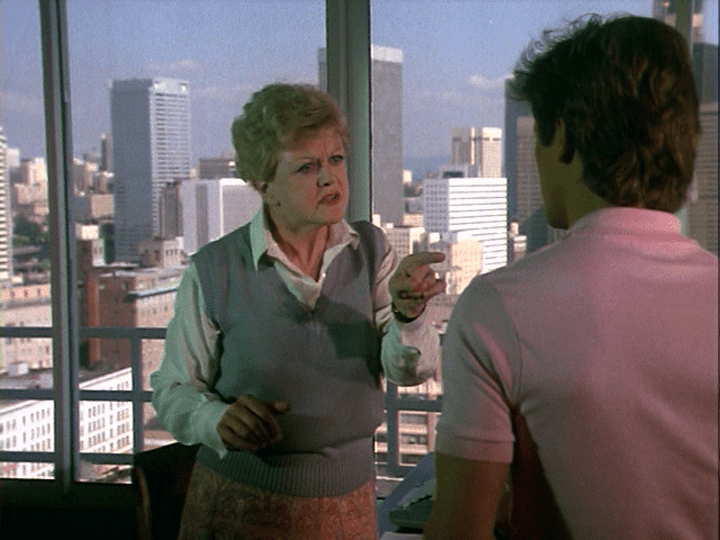
The moment Jessica solves the mystery is what I like to call the fair play pause point. At this point in the narrative, if the writers have played fair, we the audience should have all the clues we need to solve the mystery. There are two murders this episode, but Lila’s murder is the central mystery, and the one that Jessica solves. Her aha moment is the realization that the suspicious phone call summoning her to Professor Lowery’s office was placed by a “person” of unknown gender, rather than a man. At this point, does the audience have enough information to conclusively determine who killed Lila?
Clues!
Caller ID
I’m going to take Jessica’s “person” reasoning one step further. All of the characters this episode are cis-gender men and women. So, if the fact that the caller was not necessarily a man is revelatory, we can conclude that the possibility of the caller being a woman is significant. There are only two female characters left alive at this point in the narrative, Jessica and Amelia. Therefore, the possibility that Amelia is the caller, and therefore the person responsible for pushing Jessica down the stairs, is important.
A DArk Colored Car
During their open air and cold coffee brunch, Edmund tells Jessica that on the night of Allison Brevard’s murder, he and Lila were harassed by the driver of a dark colored car. After brunch, Jessica returns to campus and gleans from Todd that he shares a yellow station wagon with his wife. This tells us both that Jessica thinks the identity of the driver of the dark car is important, and that it isn’t Todd Lowery. Earlier in the episode, we were shown David’s red sports car, so we can also eliminate him as the driver of the dark colored car. That leaves two possible people who may have harassed Lila and Edmund that night: Jack and Amelia.
An Inflatable Raft
Early in the episode, we learn that Amelia manages Edmund’s bills, and therefore knows about his personal purchases, like inflatable rafts, and, presumably, charges from the Lumberjack Inn. This reinforces the possibility that Amelia knows about Edmund and Lila’s affair, but it does not eliminate Jack as the harassing driver, or as his wife’s murderer.
Suspects
To revisit an observation from Part 1, this episode has a small cast, and therefore, a short list of potential suspects. So, who among them had motive, means, and opportunity to murder Lila?
Motive
Five characters potentially have motives for Lila’s murder. Edmund Gerard and Todd Lowery were both allegedly involved in potentially compromising affairs with her. Jack was jealous and possessive of his estranged wife. Amelia may have been jealous of Lila if she knew about Edmund’s affair. David may have wished to silence Lila in order to create an illusion of an alibi for himself for the night of Allison Brevard’s murder.
Means and Opportunity
In this case, means and opportunity are inseparable, because Lila was killed with a weapon available at the scene. The only suspect we know had an alibi for the time of Lila’s death was David, who was under police surveillance at the time. The remaining four characters, Edmund, Todd, Jack, and Amelia, do not have alibis for Lila’s murder.
That DArk Colored Car Again?
Unknown to Jessica at the time, but shown to the audience, a dark car drove away from abandoned warehouse 33 moments before Jessica discovered a dying Lila. Therefore, in addition to David, we can eliminate Todd Lowery and his yellow station wagon. This leaves Edmund, Amelia, and Jack as the remaining suspects. If we assume the dark car at the warehouse is the same dark car that harassed Lila and Edmund near the Lumberjack Inn, we can let Edmund out. But, as Amelia says, lots of people drive dark colored cars.
J’accuse!
This episode fails to make a clear cut case against any single suspect. Instead, a lot of time is spent debating David’s guilt or innocence, when he’s literally the only suspect to have an alibi.
The clues only indirectly implicate Amelia. She is one of two suspects who could have harassed Edmund and Lila near the Lumberjack Inn. She is the only non-man “person” who could have lured Jessica to Lowery’s office. However, that doesn’t mean she is the only person who could have murdered Lila.
Unsolved Mysteries
In fact, this episode transgresses (or transcends?) the norms of the genre by leaving a lot of mysteries unsolved.
Jessica’s Briefcase

Did David rifle through Jessica’s briefcase? If so, why?
Jack’s Alibis
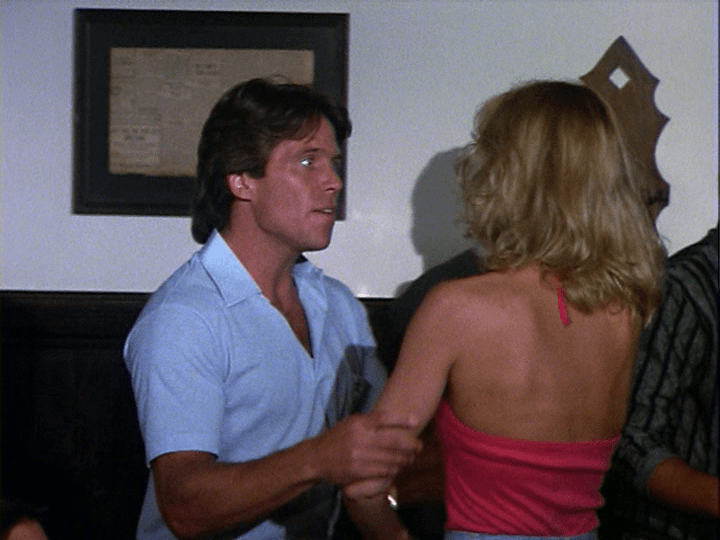
We never learn if Jack, who should have been the lead suspect in his wife’s murder, had an alibi for that night. Yet both Lt. Andrews and Jessica are inexplicably uninterested in him. In my opinion, this is an oversight that weakens the story.
Another weak point is the solution to Allison Brevard’s murder, which is wrapped up in a way that feels abrupt and half hearted. I think the writers missed an opportunity: What if Jack was the burglar who killed Allison Brevard? By making Jack the culprit, this element of the plot would have been more fully incorporated into the main storyline. Further, Jack would then have been conclusively eliminated as the dark car driver at the Lumberjack Inn, making the case against Amelia stronger as well.
Lila’s Other Man
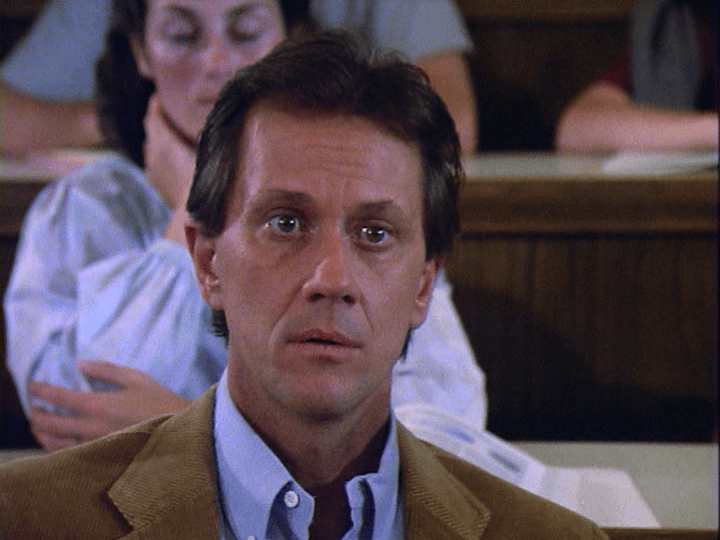
Who was the other man of whom Jack was so jealous? We know it wasn’t David, and Jessica suspected it was Professor Todd Lowery.
Jessica confronted Lowery in her Wednesday lecture in such a brash and public way that David heard gossip about it shortly afterward. Amelia must also have heard, because she decided to capitalize on her suspicions of Lowery in order to lure Jessica into a trap.
My theory is that Edmund also heard about the dramatic exchange, and then decided to exaggerate Lowery’s alleged affair with Lila. Was Lowery really as subtle and dangerous as Edmund would have had Jessica believe? I think about that yellow station wagon, and his wife, Emily, a great gal who’s tough to fool, and it seems to me that his relationship with Lila likely wasn’t much more than a misguided flirtation.
On the other hand, we know for certain that Edmund had repeated sexual encounters with Lila. When Jack won’t answer Jessica’s questions about other men, I think it’s because he sees Edmund, and not Todd, as the real threat to his marriage.
David’s Other Woman
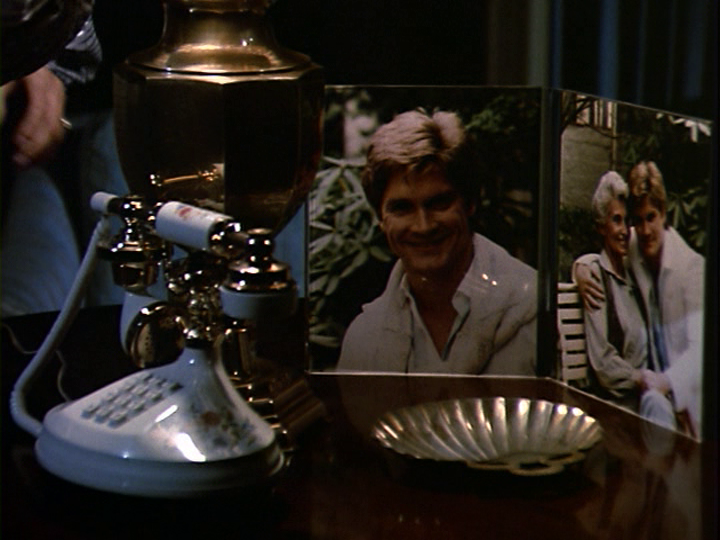
What was the nature of the relationship between Allison Brevard and David? Even though he was innocent of her murder, we can’t quite trust David’s story. And, since we’re stuck in the dark about Allison, we’ll also never have insight into David’s true intentions towards Jessica.
Episode Rating

Four out of four stars – this is one of my favorite episodes!
I love this episode. It’s menacing, and ambiguous, and untidy, and we can’t quite get a hold on the whole truth. We never fully understand Jack, or Todd, or Edmund, or especially, and most memorably, David.
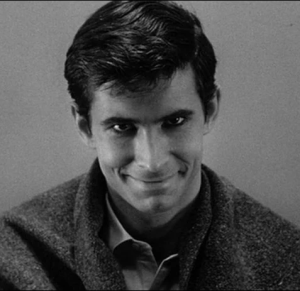
What kind of person is David Tolliver, and why is he interested in Jessica? One popular take is that David’s combination of youthful good looks, pervading creepiness, and preoccupation with older women is inspired by Norman Bates. We know the MSW writers are fans of Psycho and Alfred Hitchcock. The comparison is apt, and probably correctly attributed. However, David Tolliver gives me the creeps in a different kind of way, which I humbly submit in Part 4: Bonus Features.


Part 4: Bonus Features
Discover more from Murder, She Wrote, She Wrote
Subscribe to get the latest posts sent to your email.

 Murder, She Wrote, She Wrote